
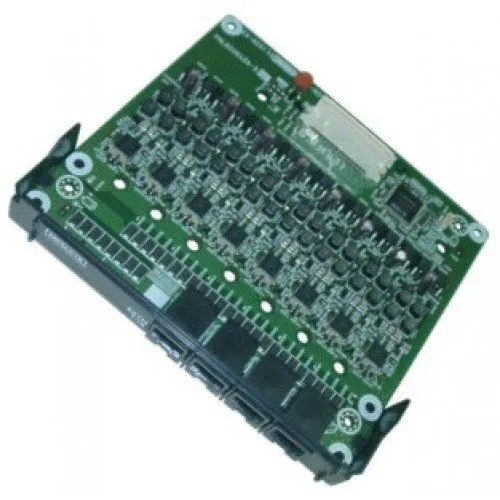
Panasonic KX-NS5110X — VoIP DSP Card (S-Type) for KX-NS700
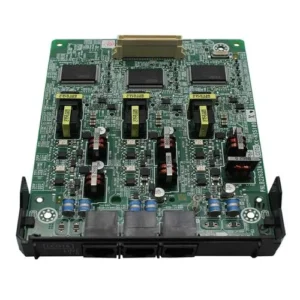
The Panasonic KX-NS5110X is an S-Type VoIP Digital Signal Processor (DSP) card designed for the Panasonic KX-NS700 Smart Hybrid PBX system. It provides the DSP resource layer that enables the KX-NS700 to process IP-based voice communication — without the KX-NS5110X installed, the KX-NS700’s VoIP, conference, unified messaging, and DISA functions are limited by the base DSP resource available in the system.
The card installs in the dedicated DSP slot on the KX-NS700 base unit. A maximum of one DSP card can be installed per system. The KX-NS5110X is the S-Type (small) DSP card — the entry-level DSP resource option for the KX-NS700 platform, providing 63 DSP channels. The card also includes an activated licence for four IP proprietary telephone extensions, reducing the initial IP phone deployment cost when the system is first equipped with DSP capability.
What a DSP Card Does
The DSP card is the signal processing engine that enables the KX-NS700 to handle digitally processed voice operations. Without sufficient DSP resource, IP calls, conference calls, voicemail, auto-attendant, and DISA operations are constrained. The KX-NS5110X adds 63 DSP channels to the system’s processing pool — each DSP channel represents one concurrent DSP-dependent operation.
DSP channels are consumed by the following functions on the KX-NS700:
- VoIP calls — Each active SIP trunk call or H.323 IP call consumes DSP channels while the call is in progress
- IP extensions — IP phone-to-IP phone calls that require DSP transcoding (codec conversion between endpoints) consume DSP channels
- Conference calls — Multi-party conference bridges consume DSP channels for the duration of the conference
- Unified Messaging — Voicemail recording, playback, and auto-attendant greetings consume DSP channels when active
- DISA / OGM — Direct Inward System Access and outgoing message playback consume DSP channels
The number of DSP channels required at any moment depends on the combination of concurrent VoIP calls, conference sessions, and unified messaging operations active simultaneously. System administrators sizing DSP resource should consider peak concurrent load across all DSP-consuming functions rather than just VoIP trunk count.
Voice Codecs
The KX-NS5110X supports the following ITU-T voice codec standards:
G.711 — The uncompressed PCM codec used on standard PSTN and most IP telephony infrastructure. G.711 delivers the highest voice quality of the supported codecs but requires the most bandwidth per call (approximately 80–90 kbps including overhead). It is the default codec for connections to VoIP service providers and SIP trunks where bandwidth is not a constraint.
G.722 — A wideband codec operating at 16 kHz sampling rate, delivering HD voice quality — noticeably higher speech intelligibility and naturalness than the narrowband 8 kHz G.711. G.722 is used for HD voice calls between compatible endpoints — including Panasonic IP proprietary phones that support wideband audio — providing improved conversation quality on internal IP-to-IP calls.
G.729A — A compressed codec requiring approximately 8–16 kbps per call, suitable for deployments where WAN bandwidth is limited. G.729A enables more concurrent VoIP calls over a constrained internet connection at the cost of a modest reduction in voice quality compared to G.711. It is commonly used for SIP trunk calls over ADSL or limited-bandwidth broadband connections.
T.38 Fax Transmission
The KX-NS5110X supports the T.38 standard for real-time fax transmission over IP networks. T.38 is the ITU-T protocol specifically designed to carry Group 3 fax over packet-switched networks reliably — compensating for the packet loss and jitter that cause standard fax-over-VoIP (FoIP) to fail when fax modem tones are transmitted over a G.711 or compressed codec connection.
T.38 support allows organisations connecting fax machines to the KX-NS700 to transmit faxes over SIP trunks to service providers that support T.38 without requiring a dedicated PSTN fax line — an important capability for organisations migrating from PSTN to SIP trunking while retaining fax services.
DISA Channel Expansion
The DISA (Direct Inward System Access) and auto-attendant function requires DSP channels to process incoming calls and play outgoing messages. Installing the KX-NS5110X increases the number of DISA channels available to 30, enabling more simultaneous incoming calls to be answered and routed by the auto-attendant. Without the DSP card, the system’s DISA capacity is limited by the base DSP resource — insufficient DISA channels result in callers receiving busy signals or delayed auto-attendant responses during peak inbound call periods.
IP Phone Licence
The KX-NS5110X includes an activated software licence for four IP proprietary telephone extensions on the KX-NS700. This licence allows four Panasonic IP proprietary phones (such as the KX-NT300 or KX-HDV series) to be registered and used as full-featured IP extensions on the system immediately upon DSP card installation, without requiring separate IP phone licence purchase for these initial four endpoints.
As the IP phone deployment grows beyond four extensions, additional IP phone licences must be purchased separately and activated on the system. The included licence is not transferable to other systems.
IP DECT Antenna Connection
The KX-NS5110X provides an IP DECT antenna connection point. This interface enables Panasonic IP DECT base stations to connect to the KX-NS700 via the DSP card, allowing IP DECT cordless phones to be deployed as wireless IP extensions on the system. IP DECT extends the system’s extension coverage to areas of the building not served by wired ethernet infrastructure — without requiring a separate IP DECT controller.
Call Recording
The KX-NS5110X includes call recording capability, enabling telephone conversations to be captured on the system. Call recording consumes DSP channel resource during the recording period and typically stores recordings to the system’s SD memory card (KX-NS7134, sold separately). Recording rules — which extensions are recorded, which call directions, and retention policies — are configured in the system administration interface.
DSP Card Types — KX-NS700 Context
The KX-NS700 supports three DSP card types of increasing capacity:
| DSP Card | Type | DSP Channels |
|---|---|---|
| KX-NS5110X | S (Small) | 63 channels |
| KX-NS5111X | M (Medium) | 128 channels |
| KX-NS5112X | L (Large) | 256 channels |
Only one DSP card can be installed at a time. The appropriate card size depends on the total concurrent DSP-consuming operations the system must support at peak load. Organisations with high simultaneous VoIP trunk counts, active conference usage, and substantial unified messaging traffic may require the M or L type to avoid DSP resource exhaustion during peak periods. The S-type KX-NS5110X is typically appropriate for smaller deployments with moderate concurrent VoIP and messaging activity.
Compatible Systems
The KX-NS5110X is compatible with the following Panasonic PBX platforms:
- Panasonic KX-NS700 — Primary compatible system
- Panasonic KX-NS700G — Regional variant
It is not compatible with the KX-NS500, KX-NS520, KX-TDA, or KX-TDE series systems, which use different DSP card formats. The correct DSP card model must be matched to the specific PBX platform.
Ideal Users
- IT and Telecoms Managers Deploying IP Trunking on KX-NS700 — The KX-NS5110X is the required DSP resource card for enabling SIP trunk connectivity on the KX-NS700. Organisations migrating from PSTN to SIP trunking — to reduce line rental costs, consolidate voice and data on a single IP connection, or access hosted VoIP services — must install a DSP card before SIP trunks can be activated and used for calls. The S-type provides sufficient channels for initial SIP trunk deployments on smaller KX-NS700 systems.
- Businesses Deploying IP Phones on KX-NS700 — The included four-IP-phone licence provides a starting point for IP phone deployment without additional licence purchase, and the DSP channels support the codec processing required for IP-to-IP and IP-to-PSTN calls across the system. Organisations deploying Panasonic IP proprietary phones or third-party SIP phones on the KX-NS700 require DSP resource to be available for call transcoding.
- Organisations Using KX-NS700 Unified Messaging and Auto-Attendant — The voicemail, voice messaging, and auto-attendant features of the KX-NS700 are DSP-dependent. Systems handling significant voicemail traffic or relying on the auto-attendant for primary call routing should ensure adequate DSP channels are available by installing the appropriate card size — the S-type for moderate unified messaging usage, the M or L type for high-volume environments.
- Businesses Requiring T.38 Fax over SIP — Organisations retaining fax services while migrating to SIP trunking need T.38 support in the PBX to pass fax calls reliably over IP. The KX-NS5110X’s T.38 support enables this without maintaining a separate PSTN fax line.
- Panasonic KX-NS700 Dealers and System Integrators — The KX-NS5110X is the standard DSP card stocked for KX-NS700 deployments requiring VoIP capability. System integrators specifying KX-NS700 systems with SIP trunking, IP phones, or unified messaging should include the appropriate DSP card in the bill of materials from the outset — the system cannot deliver these functions without DSP resource installed.
Card Specifications
| Attribute | Detail |
|---|---|
| Model | KX-NS5110X |
| Card Type | S-Type VoIP DSP Card |
| Compatible System | Panasonic KX-NS700 / KX-NS700G |
| Installation Slot | DSP slot on KX-NS700 base unit |
| Maximum Cards per System | 1 |
| DSP Channels | 63 |
Voice and Protocol Support
| Attribute | Detail |
|---|---|
| Voice Codecs | G.711 (narrowband), G.722 (wideband HD voice), G.729A (compressed) |
| Fax Protocol | T.38 (real-time fax over IP) |
| Standards Compliance | ITU-T G.711, G.722, G.729A, T.38 |
Features Enabled
| Feature | Detail |
|---|---|
| VoIP Calls | SIP trunks and IP extension calls |
| Conference Calls | Multi-party conference bridging |
| Unified Messaging | Voicemail and auto-attendant |
| DISA / OGM | Direct Inward System Access, outgoing message playback |
| DISA Channels | Expanded to 30 with card installed |
| IP Phone Licence | 4 IP proprietary telephone licences included |
| IP DECT | Antenna connection for IP DECT base stations |
| Call Recording | Yes — stores to system SD memory card |
DSP Card Comparison (KX-NS700)
| Card Model | Type | DSP Channels |
|---|---|---|
| KX-NS5110X | S (Small) | 63 |
| KX-NS5111X | M (Medium) | 128 |
| KX-NS5112X | L (Large) | 256 |
 No products in the cart.
Reviews
There are no reviews yet.