
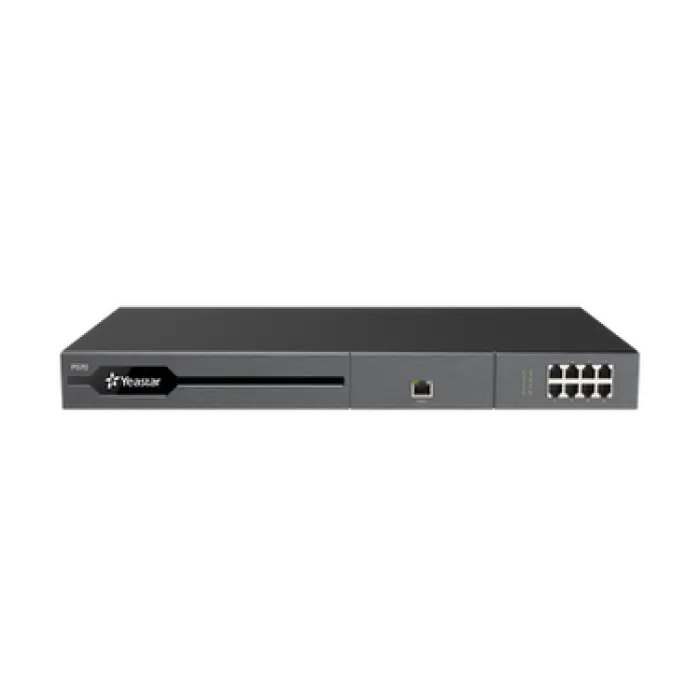
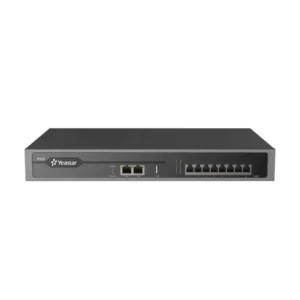
Yeastar P560 P-Series IP PBX | The Unified Communications Powerhouse for Ambitious Mid-Size Business
Growth is relentless. It fills desks, adds departments, multiplies call volumes, and stretches communication infrastructure in directions that were never anticipated when the original phone system was installed. And somewhere between the moment a business outgrows its entry-level PBX and the moment it genuinely needs enterprise-scale infrastructure, there exists a critical middle ground — a space where communication demands are serious, budgets are disciplined, and the need for both capability and scalability is equally urgent.
The Yeastar P560 P-Series IP PBX was engineered to own that middle ground completely.
Positioned at the confident center of Yeastar’s acclaimed P-Series Unified Communications platform, the P560 delivers a communication capability that mid-size businesses have historically had to significantly overpay for — either by investing in undersized systems that struggle at their limits, or by purchasing oversized enterprise infrastructure they cannot fully utilize or afford to maintain. The P560 refuses both compromises — delivering 100-user capacity, 60 concurrent calls, comprehensive UC features, advanced call center capability, and enterprise-grade security at a price point and implementation complexity that mid-size business IT teams can genuinely work with.
This is the system that growing businesses choose when they are done outgrowing their phone system every three years. The platform that mid-size organizations select when they need Unified Communications to be a reality today — not a roadmap item for when the budget eventually allows it.
What Is the Yeastar P560 P-Series IP PBX?
The Yeastar P560 is a professional-grade, on-premise Unified Communications PBX system representing the strategic mid-tier of Yeastar’s transformative P-Series platform — positioned precisely between the small business-focused P550 and the large enterprise P570, and designed to serve the specific communication needs of mid-size organizations with the depth, scalability, and feature completeness that this demanding segment requires.
Like every system in the P-Series family, the P560’s identity is defined by its dual nature: PBX meets UC. Traditional IP PBX functionality — call routing, extension management, trunk connectivity, voicemail — forms the reliable foundation. But above that foundation, the P560 builds a comprehensive Unified Communications superstructure that includes built-in UC mobility clients, integrated video calling, visual operator management, advanced call center queuing, native CRM integration, and secure remote working capability — all included as standard, without per-seat licensing penalties and without the subscription escalation that makes cloud UC platforms so financially challenging at growing user counts.
For mid-size businesses building communication infrastructure meant to serve them through the next phase of growth — and the phase after that — the P560 is the platform that delivers the right capability at the right scale, managed with the right level of simplicity for organizations that have real IT responsibilities but not enterprise IT teams.
The Yeastar P560 Is the Strategic Communication Choice For:
- Mid-size businesses with 50 to 100 users requiring a communication platform that matches the sophistication of their operation
- Organizations that have outgrown their P550 or entry-level PBX and need expanded capacity without rebuilding infrastructure from scratch
- Multi-department businesses where different teams — sales, support, operations, administration — have distinct and simultaneous communication requirements
- Companies with hybrid and remote workforces needing a unified platform that makes distributed teams fully integrated members of the organization’s communication ecosystem
- Customer-facing operations running inbound support queues, sales lines, and booking systems that demand professional call center capability
- Businesses in regulated industries — healthcare, legal, financial services — where call recording, audit trails, and data sovereignty are compliance requirements rather than optional features
- IT-managed environments requiring granular system control, detailed reporting infrastructure, and enterprise-grade security without enterprise implementation complexity
- Multi-branch organizations needing seamless inter-office communication and centralized management across distributed locations
- Growing businesses on a five-year planning horizon that need a platform with clearly defined upgrade paths and long-term architectural protection
- MSPs and IT solution providers deploying professional UC infrastructure for demanding mid-market clients
Yeastar P560 Core Specifications at a Glance
| Specification | Detail |
|---|---|
| Max Users / Extensions | Up to 100 |
| Concurrent Calls | Up to 60 |
| SIP Trunks | Up to 60 |
| Physical Trunk Interfaces | Via modular expansion cards |
| Expansion Card Slots | 4 |
| Voicemail | Up to 100 mailboxes, expanded storage |
| Call Recording Storage | Local HDD / External NAS / Cloud |
| Linkus UC Clients | Included (Web, Desktop, Mobile) |
| Video Calling | Yes — SIP video calls supported |
| Operator Panel | Built-in, browser-based |
| Call Center Module | Built-in advanced queue management |
| CRM Integration | Salesforce, HubSpot, Zoho, Bitrix24, Dynamics 365 and more |
| Network Ports | 2 × Gigabit Ethernet (LAN + WAN) |
| Management Interface | Web-based GUI + Yeastar Central Management |
| Security | TLS, SRTP, HTTPS, Fail2Ban, IP Blacklist/Whitelist, 802.1X |
| Auto-Provisioning | 200+ IP phone models |
| High Availability | Optional configuration |
| Power Supply | AC Adapter with redundant option |
| Form Factor | Desktop / compact rack-adjacent unit |
Yeastar P560 Key Features — Where Mid-Size Business Communication Meets Enterprise Intelligence
☎️ 100 Users, 60 Concurrent Calls — Built for the Busy Mid-Size Enterprise
The P560’s capacity architecture is engineered with the communication reality of genuine mid-size business operations firmly in mind. Supporting up to 100 extensions and 60 simultaneous concurrent calls, the system handles the communication load of a fully active, multi-department organization without strain — even during the peak periods that expose the limitations of undersized systems.
Sixty concurrent calls is a genuinely impressive operational headroom for a 100-person organization. Real-world communication analysis consistently demonstrates that even in call-intensive mid-size business environments — active sales floors, busy customer support operations, multi-department offices with high internal communication volumes — peak simultaneous call activity rarely sustains above 50-60% of total user count. The P560’s 60-channel concurrent call capacity provides comfortable, sustained headroom for the full spectrum of mid-size business communication patterns — including the burst periods that characterize campaign launches, seasonal peaks, and high-demand service events.
And critically, the P560’s capacity is not a ceiling that the business will bump against in 18 months. With a clearly defined upgrade path to the Yeastar P570 for organizations whose growth pushes beyond 100 users, the P560 represents a protected investment — not a temporary solution that will need replacing as soon as the business continues its growth trajectory.
🔗 Linkus UC Clients — The Complete Unified Communications Experience, Included Without Exception
If there is one feature of the Yeastar P560 that most dramatically changes how a mid-size business communicates — and most significantly differentiates the platform from traditional IP PBX alternatives — it is the complete inclusion of Linkus UC Clients as a built-in, standard feature with no per-seat licensing, no subscription escalation, and no feature gating as user counts grow.
Linkus is Yeastar’s flagship Unified Communications application suite — a beautifully designed, comprehensively featured platform that transforms every device your team uses into a fully integrated business communication endpoint:
- 🖥️ Linkus Web Client — Complete UC functionality delivered directly in any modern web browser. No software installation. No IT deployment. Any computer, anywhere with internet, becomes a fully featured business phone extension in seconds.
- 💻 Linkus Desktop Client — Native applications for Windows and macOS delivering a dedicated, always-accessible UC environment with system tray integration, desktop notifications, and full background operation for staff whose workstation is their primary work tool.
- 📱 Linkus Mobile Client — iOS and Android applications that transform every team member’s personal smartphone into a complete business communication device — receiving calls on the company number, not personal numbers, with full transfer, hold, conference, and UC feature access from anywhere in the world.
Every Linkus client — across every platform, for every user — delivers the unified experience that genuinely transforms how distributed, hybrid, and mobile teams communicate:
- Voice calling from any device on the business number — with professional caller ID, call recording, and full PBX feature integration
- HD video calling between Linkus users without requiring a separate video conferencing subscription or platform
- Instant messaging and team chat with persistent conversation history, searchable archives, and organized team channels
- Real-time presence awareness — see exactly who is available, on a call, in a meeting, or away before initiating contact — across the entire 100-user organization simultaneously
- Unified voicemail management — access, listen, download, and manage voicemail from any device, with email notification and transcription options
- Shared contacts and call history — complete organizational contact directory and personal call log synchronized and accessible across all devices
- File and document sharing in chat conversations for seamless collaborative workflows that keep communication contextual
- CRM integration within the calling interface — customer records surfaced automatically at the moment of inbound call arrival for informed, personalized conversation from the first word
For a 100-person organization where a significant proportion of staff work remotely, travel regularly, or operate across multiple office locations, Linkus UC fundamentally eliminates the communication disadvantage of physical distance — making every team member a fully integrated, professionally indistinguishable member of the organization’s communication ecosystem regardless of where they are physically located.
At the per-user licensing cost that competing UC platforms charge for this capability across 100 users, the P560’s inclusive approach to Linkus UC represents a compelling financial advantage that compounds with every passing month.
🎛️ Advanced Built-In Operator Panel — Visual Command Over Every Call in the Organization
For the receptionists, administrators, and team coordinators who manage call traffic on behalf of larger organizations, the difference between a standard IP phone interface and a proper visual operator console is the difference between managing by guesswork and managing by intelligence. The Yeastar P560’s built-in Operator Panel delivers that intelligence — a sophisticated, real-time, browser-based visual management environment that puts complete organizational call visibility and instant call action capability at the fingertips of every operator:
- Complete organizational presence display — all 100 extensions visible with real-time status indication — available, on call, ringing, do-not-disturb, and away — updated continuously without manual refresh
- Drag-and-drop call transfer — active calls moved between extensions with a single mouse gesture, eliminating dial-code complexity and reducing transfer errors that frustrate callers and colleagues alike
- Live call monitoring — every active call across the organization displayed with caller ID, called party, and call duration — complete real-time visibility of organizational communication activity
- Multi-queue visibility — simultaneous monitoring of all active call queues with depth, wait time, and agent availability displayed live
- Call parking and retrieval — park calls to numbered slots and retrieve them from any extension, managed visually from the panel interface
- Supervisor intervention tools — barge-in, monitor, and whisper capabilities for quality assurance and agent coaching, initiated from the Operator Panel with a single click
- Extension management shortcuts — toggle do-not-disturb, activate call forwarding, and manage extension states for managed extensions directly from the panel
- Integrated call actions — answer, hold, transfer, conference, and disconnect calls from the visual interface without switching between applications
For a 100-person organization where call traffic is complex, transfer volumes are high, and caller experience quality directly reflects on the organization’s professional reputation, the Operator Panel is the operational infrastructure that turns capable receptionists into exceptional communication managers.
📊 Comprehensive Built-In Call Center Module — Customer Service Intelligence at Mid-Market Scale
The Yeastar P560 includes a fully featured call center module as standard — not as an optional add-on, not as a separately licensed feature tier, but as a built-in component of the platform that is operational from day one without additional cost or complexity. For mid-size businesses running customer-facing communication operations, this built-in capability represents an extraordinary value proposition:
Advanced ACD and Queue Management
- Multiple queue distribution strategies — ring all, round robin, least recent, fewest calls, random, and memory hunt — configurable independently for each queue to match the staffing model and service objective of each customer-facing team
- Skill-based routing — direct inbound calls to agents with the specific product knowledge, language capability, or service specialization that best matches the caller’s need — dramatically improving first-call resolution rates
- Priority queue management — assign elevated priority to VIP callers, premium tier customers, or urgent escalation calls ensuring they receive preferential handling without disrupting standard queue operations
- Queue callback — the capability that transforms customer satisfaction scores at mid-size contact operations. Allow callers to request a callback rather than holding — preserving their place in queue while freeing them from hold music — and automatically delivering the callback when an agent becomes available
Real-Time Operations Intelligence
- Live queue dashboards and wallboards — real-time display of queue depth, average wait time, agent availability, calls answered, calls abandoned, and SLA compliance metrics — visible to supervisors and agents simultaneously
- Agent status management — supervisors monitor and manage agent login/logout status, ready/not-ready states, and after-call work time from the central management interface
- SLA threshold alerting — automatic supervisor notifications when queue wait times exceed defined acceptable limits — enabling proactive staffing adjustments before service levels deteriorate
- Barge-in and whisper coaching — supervisors intervene in active agent calls silently (monitoring), with agent-only audio (whisper coaching), or full-party participation (barge-in) — supporting agent development and quality management without the complexity of dedicated workforce management software
Historical Analytics and Reporting
- Comprehensive call detail records across all extensions, trunks, queues, and conference sessions — with complete metadata for every call processed through the system
- Queue performance reports — call volume by time period, answer rate, abandonment rate, average handle time, average wait time, and SLA compliance metrics over configurable historical periods
- Agent performance analytics — individual agent call counts, handle times, queue login durations, and productivity metrics for performance management and payroll-relevant activity tracking
- Missed call analysis — complete visibility of every call that was not answered, including caller ID, time of attempt, and which extension or queue was the target
- Custom report builder — configurable reporting views that present the specific KPIs and time periods most relevant to each management audience
- Scheduled report delivery — automatically generate and email reports to designated recipients on daily, weekly, or monthly schedules
IVR and Automated Call Handling
- Multi-level IVR trees with unlimited menu depth — from simple two-option auto-attendants to sophisticated self-service workflows that handle appointment booking, account queries, service selection, and department routing without agent involvement
- Time-based routing — different IVR behaviors and routing destinations based on time of day, day of week, and configurable holiday calendars — ensuring callers always reach the right destination regardless of when they call
- Custom audio prompt management — upload professionally recorded audio files for all IVR prompts, queue announcements, hold music, and greeting messages from the web management interface
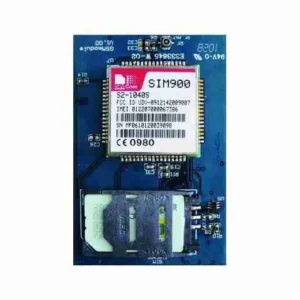
🔒 Four Expansion Card Slots — Twice the Modular Flexibility of the P550
Where the P550 offers two expansion card slots, the P560 doubles that to four — providing significantly greater flexibility to build the precise hybrid trunk architecture that mid-size businesses with diverse infrastructure requirements demand:
| Card Type | Function | Deployment Value |
|---|---|---|
| EX08 | 8-port analog FXO/FXS | Analog PSTN line retention, analog device extension |
| EX30 | E1/T1/PRI digital trunk | High-capacity digital trunk connectivity |
| SO | Single E1/T1/J1 trunk | Modular digital trunk addition |
| GSM/3G/4G | Cellular trunk module | On-net mobile savings, cellular failover |
| BRI | ISDN BRI digital trunk | ISDN Basic Rate connectivity |
Four expansion slots enable mid-size businesses to implement sophisticated multi-trunk-type architectures that would require multiple external gateway devices on competing platforms — maintaining legacy analog lines through FXO cards, connecting digital ISDN or PRI trunks through BRI or E1 cards, adding cellular backup through GSM modules, and combining all of these with primary SIP trunks — all managed through a single unified PBX interface with zero additional hardware footprint beyond the expansion cards themselves.
CRM Integration — Intelligence That Makes Every Call Count
The Yeastar P560 delivers native, bidirectional integration with the world’s leading CRM and business management platforms — transforming every inbound and outbound call from an isolated communication event into an enriched, automatically documented business intelligence touchpoint:
Supported CRM Platforms:
- Salesforce — automatic screen pop of complete contact and opportunity records on every inbound call, click-to-dial from Salesforce interface, automatic call activity and outcome logging, and Salesforce workflow triggers based on call events
- HubSpot — bidirectional contact synchronization, automatic deal and contact record updates following call completion, HubSpot workflow integration based on call outcomes and durations
- Zoho CRM — complete contact record surfacing on inbound calls with automatic call history population and CRM note creation from call recordings
- Bitrix24 — full integration for organizations using Bitrix24 as their combined CRM, project management, and team collaboration platform
- Microsoft Dynamics 365 — enterprise-grade CRM integration for businesses standardized on the Microsoft ecosystem, with complete contact record surfacing and automatic activity logging
- Custom API Integration — Yeastar’s open API framework enables development teams to build custom integrations with proprietary CRM systems, ERP platforms, ticketing systems, and business management tools
The Business Impact of CRM-Connected Telephony:
When a sales representative’s phone rings and their screen immediately shows the caller’s name, company, open opportunities, last interaction date, and any active support cases — before they even say hello — the nature of that conversation changes fundamentally. The representative arrives informed, the customer feels recognized, and the interaction begins with the relationship context that distinguishes professional service from impersonal transaction processing.
For a 100-person organization where dozens of customer-facing interactions happen simultaneously throughout the working day, this automatic relationship intelligence — multiplied across every call, every agent, every team — represents a customer experience and operational efficiency advantage that compounds into measurable business outcomes: higher conversion rates, faster issue resolution, stronger customer retention, and complete interaction documentation without manual data entry overhead.
Enterprise Security Architecture — Professional-Grade Protection for Mid-Market Communication
Mid-size businesses face the same security threat landscape as enterprises — without always having enterprise-scale security resources to defend against it. The Yeastar P560’s security architecture closes that gap — delivering a comprehensive, layered security framework that protects every dimension of the organization’s communication infrastructure:
Multi-Layer Security Framework:
Encryption at Every Layer
- TLS (Transport Layer Security) — all SIP signaling between the PBX and connected devices, remote Linkus clients, and SIP trunk providers is encrypted in transit — preventing credential theft, call hijacking, and man-in-the-middle attacks that target unencrypted SIP deployments
- SRTP (Secure Real-Time Transport Protocol) — all voice media streams are encrypted end-to-end — ensuring call content cannot be captured even if network traffic is intercepted at any point in the delivery path
- HTTPS management interface — all administrative access to the P560’s web management portal is encrypted, preventing credential interception during system administration sessions
Intrusion Prevention and Access Control
- Fail2Ban intrusion prevention — automatically detects and blocks IP addresses attempting brute-force authentication attacks against SIP accounts and the management interface — the most prevalent attack vector against IP PBX systems globally, and the one that most frequently results in toll fraud charges for unprotected deployments
- IP Blacklist and Whitelist management — granular control over which IP addresses and geographic regions are permitted to interact with the P560 — dramatically reducing the attack surface for organizations whose legitimate usage originates from predictable geographic locations
- 802.1X network authentication — port-based network access control ensuring that only authorized, authenticated devices can connect to the network infrastructure hosting the P560
- Extension-level call permission controls — configure which extensions can make international calls, premium rate calls, or other high-risk call types — preventing toll fraud scenarios where compromised extension credentials are used to generate fraudulent call charges
Data Protection and Compliance
- Call recording access controls — role-based permissions governing which administrators, supervisors, and users can access, download, replay, and delete recorded calls — ensuring sensitive call content is accessible only to appropriately authorized personnel
- OpenVPN client — encrypted VPN tunnel support for secure remote management and for connecting remote PBX instances across untrusted network infrastructure
- Comprehensive audit logging — every administrative action, configuration change, login event, and system modification is logged with timestamp, user identity, and action detail — providing the forensic trail that regulatory compliance frameworks and security incident investigation require
- Trusted certificate authority management — enterprise PKI integration for organizations managing their own certificate infrastructure
For mid-size businesses in healthcare, legal, financial services, and any sector where communication privacy and documentation are regulatory obligations rather than preferences, the P560’s security architecture provides the compliance infrastructure needed without demanding the specialist security expertise that enterprise-grade security tools typically require to deploy and maintain.
Remote Working and Business Mobility — The P560 Follows Your Team
The organizational reality of modern mid-size business is that work happens everywhere — in the office, at home, in client meetings, in transit, and across multiple office locations simultaneously. The Yeastar P560 is architecturally designed for this reality — not retrofitted to accommodate it, but built from the ground up with distributed work as a first-class use case:
Yeastar Remote Access Service — Zero-Friction Remote Connectivity
The built-in Yeastar Remote Access Service (RAS) enables remote Linkus UC clients to connect securely to the P560 without VPN configuration, without firewall rule changes, and without any technical setup requirement from the end user. Remote staff install Linkus, enter their credentials, and are immediately connected to the P560 as fully featured business extensions — with the same UC capabilities, the same call recording coverage, the same presence visibility, and the same professional caller ID presentation as office-based colleagues. For mid-size businesses whose IT capacity is stretched across many responsibilities, zero-configuration remote connectivity is not merely convenient — it is operationally transformative.
Hot Desking and Flexible Working Support
For organizations operating flexible, shared, or activity-based working environments, the P560 supports hot desking — allowing staff to log in to any configured desk phone with their personal extension credentials, receiving their calls, accessing their contacts, and maintaining their personal call history regardless of which physical desk or office location they are working from that day.
Multi-Site Inter-Branch Connectivity
For organizations operating across multiple office locations, the P560 serves as the communication hub for a unified multi-site telephony architecture — connecting branch offices via SIP trunks into a single, centrally managed dial plan where:
- Staff dial colleagues at any location on short internal extension numbers — no long-distance charges, no separate call handling
- Inbound calls to the main business number route intelligently to the appropriate location, department, or individual based on time of day, IVR selection, or skills-based logic
- Inter-branch call transfers happen seamlessly without external trunk involvement
- Call recording, reporting, and presence visibility operate uniformly across all connected locations from the central P560 management interface
Auto-Provisioning at Mid-Market Scale — Deploy 100 Phones Without the Pain
Managing IP phone deployment across a 100-person organization using manual device programming is an IT project measured in days and frustration. The Yeastar P560’s zero-touch auto-provisioning capability — supporting over 200 IP phone models — transforms that project into a streamlined, largely automated process measured in hours:
The Auto-Provisioning Workflow:
- Configure extension profiles, phone settings, and feature key assignments in the P560 management portal
- Connect phones to the network — via PoE Ethernet or, for Wi-Fi capable models, wirelessly
- Phones automatically detect the P560 via DHCP provisioning, download their complete configuration, and register as fully programmed business extensions
What Auto-Provisioning Covers:
- Extension registration credentials and SIP account configuration
- Programmable key assignments — BLF monitors, speed dials, transfer keys, and custom functions
- Display name and extension number programming
- Ringtone, language, and audio codec preferences
- Time zone and date/time display settings
- Firmware version management — phones automatically update to the firmware version specified in the provisioning template
For IT administrators managing a 100-phone deployment across multiple departments and potentially multiple floor levels, the auto-provisioning system is the capability that makes the project achievable in a day rather than a week — and that makes ongoing phone management, new employee onboarding, and phone replacement a five-minute task from a browser rather than a desk-by-desk engineering exercise.
Supported manufacturers include Yealink, Fanvil, Grandstream, Snom, Polycom/Poly, Cisco, Htek, Panasonic, and many more — giving organizations the flexibility to standardize on their preferred handset brand while leveraging the P560’s centralized provisioning infrastructure.
Yeastar P560 vs. P550 vs. P570 — Making the Right Capacity Investment
| Feature | P550 | P560 | P570 |
|---|---|---|---|
| Max Users | 50 | 100 | 500 |
| Concurrent Calls | 25 | 60 | 120 |
| Max SIP Trunks | 25 | 60 | 100 |
| Expansion Card Slots | 2 | 4 | 4 |
| Voicemail Mailboxes | 50 | 100 | 500 |
| High Availability | ❌ | ⚠️ Optional | ✅ Active/Standby |
| Redundant Power | ❌ | ⚠️ Optional | ✅ Yes |
| Ideal Business Size | 10-50 users | 50-100 users | 100-500 users |
| UC Features | ✅ Full P-Series | ✅ Full P-Series | ✅ Full P-Series |
| Call Center Module | ✅ Built-in | ✅ Built-in | ✅ Built-in |
| CRM Integration | ✅ Yes | ✅ Yes | ✅ Yes |
| Operator Panel | ✅ Built-in | ✅ Built-in | ✅ Built-in |
| Expansion Slots | 2 | 4 | 4 |
| Upgrade Path | → P560 / P570 | → P570 | Enterprise |
The P560 occupies the critical mid-market position in the P-Series range — delivering more than double the concurrent call capacity of the P550, twice the expansion card slots, and significantly expanded SIP trunk support, while positioning comfortably below the P570’s enterprise scale and pricing. For businesses in the 50-100 user range, the P560 is the optimal capacity match — providing genuine headroom for growth without the over-specification cost of deploying a P570 prematurely.
High Availability — Optional Resilience for Mission-Critical Mid-Market Operations
Unlike the entry-level P550, the Yeastar P560 supports an optional High Availability configuration — making enterprise-grade communication resilience accessible to mid-size businesses whose operations cannot tolerate PBX downtime without significant consequence:
Active/Standby High Availability Architecture
Deploy two P560 units in an Active/Standby HA pair. The active unit handles all call processing, routing, and active connections in real time. The standby unit continuously mirrors every configuration change and call state update from the active system. In the event of hardware failure, software fault, or network disruption affecting the active unit:
- Automatic failover triggers within seconds — no manual intervention required
- The standby unit assumes complete system control seamlessly
- Active calls experience minimal disruption during the failover transition
- Users experience no reconfiguration requirement — extensions re-register automatically to the standby system
- Full UC client connectivity — Linkus clients on all platforms reconnect automatically
For mid-size businesses in sectors where a phone system outage creates immediate operational disruption — customer service operations, healthcare practices, financial services, professional services firms with client communication SLAs — the P560’s optional HA configuration provides the resilience infrastructure that converts a potential operational crisis into a managed, transparent continuity event.
Redundant Power Supply Support
Combined with optional redundant power supply configuration, the P560 can be protected against both software/hardware failure through HA and physical power infrastructure failure through dual PSU — creating a multi-layer hardware fault tolerance architecture that approaches the resilience specifications of purpose-built enterprise telephony hardware.
Real-World Deployment Scenarios — The Yeastar P560 at Mid-Market Scale
🏢 Regional Professional Services Firm — 80 Users, Multiple Departments
A regional accounting and advisory firm with 80 staff across three service departments deploys the P560 as their unified communication platform. Department-specific IVR routing directs client calls to the appropriate service team automatically. Linkus Mobile ensures partners and senior staff are reachable on their business extensions during client site visits and remote working days. All client calls are automatically recorded and stored locally for professional compliance. The Operator Panel gives reception staff complete departmental availability visibility — zero blind transfer attempts, every transfer to an available colleague.
🏥 Multi-Physician Healthcare Group — Patient Communication at Scale
A healthcare group with 12 physicians, 8 specialist clinicians, and 30 administrative staff deploys the P560 with the built-in call center module managing their appointment booking line. Queue callback eliminates patient hold frustration during morning peak periods. Skill-based routing directs specialist enquiries to appropriately credentialed staff. All patient calls are recorded for clinical documentation and compliance purposes. CRM integration surfaces patient records automatically on inbound calls for immediate, informed patient service. Remote clinical staff access the system via Linkus Mobile from community health sites.
🏨 Full-Service Hotel — Guest Experience and Operational Coordination
A 120-room full-service hotel deploys the P560 managing front desk operations, 120 guest room extensions, restaurant, housekeeping, maintenance, concierge, and management communication. Auto-provisioning delivers configured phones to every room and department without individual programming. The Operator Panel gives front desk supervisors complete room occupancy and department availability visibility. Guest calls to service departments route through the IVR to the appropriate team queue. Housekeeping and maintenance staff carry Linkus Mobile for real-time communication without fixed phone dependency.
📞 Outsourced Customer Support Operation — 60-Agent Call Center
A business process outsourcing company running a 60-agent customer support operation for multiple client brands deploys the P560 with the full call center module. Skill-based routing distributes calls to agents with the appropriate product knowledge for each client brand. Real-time wallboards keep supervisors and agents informed of queue performance against SLA targets. Queue callback reduces peak-period abandonment. Comprehensive historical reporting provides client-facing SLA compliance evidence. CRM integration with each client’s platform surfaces caller records automatically for agents handling calls across multiple client brands.
🏗️ Construction and Engineering Company — Multi-Site Project Coordination
A construction company with a head office, two regional depots, and frequent site-based project offices deploys the P560 at headquarters, connecting all locations via SIP trunks. Project managers at site locations connect via Linkus Mobile — fully integrated as headquarters extensions. Internal inter-site calls use short extension dialing at zero incremental cost. The GSM expansion card provides cellular backup trunk capability during site location connectivity issues. Auto-provisioning deploys temporary project office phones quickly for new site setups.
💼 Financial Services Organization — Compliance-Grade Communication Management
A financial advisory firm with 70 advisors and 30 support staff deploys the P560 with mandatory call recording across all extensions, strict extension-level call permission controls limiting premium rate and international calling, and role-based recording access controls limiting audio review to compliance officers and management. Comprehensive audit logging documents every system interaction for regulatory reporting. The HA configuration ensures advisor-client calls are never interrupted by system failures during trading hours when communication continuity has direct financial consequence.
Frequently Asked Questions About the Yeastar P560
What separates the Yeastar P560 from the P550 beyond user count?
The P560 offers several meaningful capability advances beyond the P550’s 50-user, 25-concurrent-call capacity. The P560 provides 60 concurrent calls, 60 SIP trunks, 4 expansion card slots (versus 2 in the P550), 100 voicemail mailboxes, optional High Availability configuration, and optional redundant power supply support — none of which are available in the P550. For organizations approaching or exceeding 50 users, or those whose business continuity requirements demand HA capability, the P560 is the appropriate platform regardless of whether current user count has reached the P550’s ceiling.
Does the Yeastar P560 include the same UC features as the larger P570?
Yes — the complete P-Series UC feature set is consistent across all P-Series models including P550, P560, and P570. Linkus UC Clients for web, desktop, and mobile, built-in Operator Panel, call center module, CRM integration, video calling, remote access service, and auto-provisioning are all included as standard on the P560 without feature reduction relative to the larger P570. The differences between models are capacity, concurrent call limits, expansion slot count, HA availability, and voicemail storage — not feature depth.
Can I upgrade from a Yeastar P560 to a P570 as the business grows?
Yes — Yeastar’s P-Series architecture is designed with upgrade path protection as a core design principle. When user counts and concurrent call requirements consistently approach the P560’s limits, migration to the P570 follows a clearly defined path that preserves configuration, routing logic, extension settings, and UC client setups. Contact your authorized Yeastar reseller for the specific migration procedure, licensing transfer options, and data migration support available for your deployment. The investment made in the P560 is architecturally protected for the organization’s next growth phase.
How does the P560 handle call recording storage at 100-user scale?
The P560 supports multiple simultaneous recording storage destinations to accommodate 100-user call recording volumes appropriately. Recordings can be stored on local internal storage for immediate access, on an externally connected NAS (Network Attached Storage) device for high-capacity on-premise storage, or automatically archived to cloud storage platforms for off-site redundancy and compliance backup. Access to recordings is managed through role-based permissions. For regulated industries with mandatory recording retention periods, the NAS integration option provides the most practical long-term storage architecture at 100-user scale.
Is the Yeastar P560 compatible with Microsoft Teams for hybrid UC environments?
The P560 is a standards-based SIP platform rather than a Microsoft Teams-certified device. In organizations using Teams for internal collaboration while managing external telephony through a dedicated PBX, the P560 operates as the external call handling layer — receiving inbound calls, managing outbound calls, running call center queuing, and recording all telephone interactions — while Teams handles internal messaging and video conferencing. For fully integrated Teams telephony with native PSTN calling through a Teams-certified PBX, consult your Yeastar reseller about the most appropriate platform architecture for your Microsoft 365 environment.
What is the Yeastar P560’s approach to toll fraud prevention?
The P560 implements multiple complementary toll fraud prevention mechanisms. Fail2Ban automatically blocks IP addresses attempting brute-force SIP credential attacks. IP Whitelist restricts SIP trunk registration to approved IP ranges only. Extension-level call permissions prevent compromised credentials from being used for international or premium rate dialing. Geographic call blocking prevents calls to high-risk international destinations that are frequently targeted by toll fraud schemes. Real-time call volume monitoring with configurable alerts notifies administrators of abnormal call pattern activity that may indicate compromise. Together, these layers provide comprehensive protection against the toll fraud scenarios that represent the most common and financially damaging IP PBX security threat.
Does the Yeastar P560 support physical analog phones as extensions?
Yes. Through FXS expansion modules (YST-S2, YST-S4, or compatible EX08 cards configured with FXS ports), the P560 can connect standard analog telephone handsets and fax machines as fully managed PBX extensions — receiving calls, making outbound calls through any configured trunk, and participating in transfers and conference calls exactly as IP phone extensions do. This capability supports businesses transitioning legacy analog telephone infrastructure at their own pace, retaining working analog devices as cost-effective extensions while the IP phone fleet is built out incrementally.
The Total Cost of Ownership Advantage — Five-Year Financial Analysis
For mid-size businesses making a serious communication infrastructure investment decision, the five-year total cost of ownership comparison between the Yeastar P560 and cloud UCaaS alternatives is an analysis that consistently produces the same conclusion — in favor of the on-premise P560 at meaningful user counts:
Illustrative 5-Year Cost Comparison — 80 Users
| Cost Component | Yeastar P560 | Cloud UCaaS (mid-tier) |
|---|---|---|
| Initial hardware investment | P560 hardware + phones | Phones only |
| Monthly per-user UC subscription | Optional (base features included) | $25-$45 per user mandatory |
| Monthly subscription total | $0-$X (optional plan) | $2,000-$3,600 per month |
| Annual subscription cost | Minimal | $24,000-$43,200 |
| 5-year subscription total | Minimal | $120,000-$216,000 |
| SIP trunk cost | Market rate | Provider rate (often marked up) |
| Data sovereignty | ✅ Complete | ❌ Provider-dependent |
| Internet dependency for internal calls | ❌ Local calls continue offline | ❌ Complete internet dependency |
| Physical trunk support | ✅ Via expansion cards | ❌ Not available |
| 5-year TCO advantage | Substantial | — |
The specific numbers vary by cloud provider, plan tier, and negotiated pricing — but the structural economics are consistent and compelling: the P560’s one-time hardware investment amortized over five years is dramatically lower than the perpetual per-user subscription cost of cloud UCaaS at 80-100 user scale. And the P560 delivers comparable or superior feature depth, superior data sovereignty, superior resilience during internet outages, and superior physical trunk flexibility alongside that financial advantage.
The Yeastar P560 — Mid-Size Business Communication, Finally at the Right Scale
There is a category of business that has always deserved better from their phone system than the market has historically provided at an accessible price point. Too large to be well-served by small business solutions. Not large enough to justify enterprise infrastructure investments. Mid-size businesses — the engine of economic activity in every market globally — have historically settled for communication platforms that were either undersized for their complexity or overpriced for their budget.
The Yeastar P560 P-Series IP PBX changes that calculus permanently. It delivers the complete Unified Communications feature set — UC mobility, integrated video, visual call management, advanced call center intelligence, native CRM integration, and enterprise-grade security — at a capacity precisely calibrated for the 50-to-100 user mid-size business, managed with the simplicity that mid-market IT teams can implement and maintain without dedicated telephony specialists, and priced in a way that makes the five-year total cost of ownership genuinely competitive with every alternative on the market.
From the receptionist whose Operator Panel finally gives her complete organizational visibility, to the sales representative whose Linkus Mobile app means client calls always reach a professional business number, to the compliance officer whose call recording infrastructure meets regulatory requirements without compromise, to the IT administrator who provisioned 80 phones in a single afternoon — every person whose work depends on reliable, intelligent, unified communication experiences the P560 as the platform that was built exactly for their reality.
This is not a compromise solution. This is not an entry-level system stretched beyond its design parameters. This is a purpose-built, precisely scaled, comprehensively featured Unified Communications platform for mid-size businesses that refuse to accept that professional communication capability should remain the exclusive preserve of organizations ten times their size.
 No products in the cart.
Reviews
There are no reviews yet.