
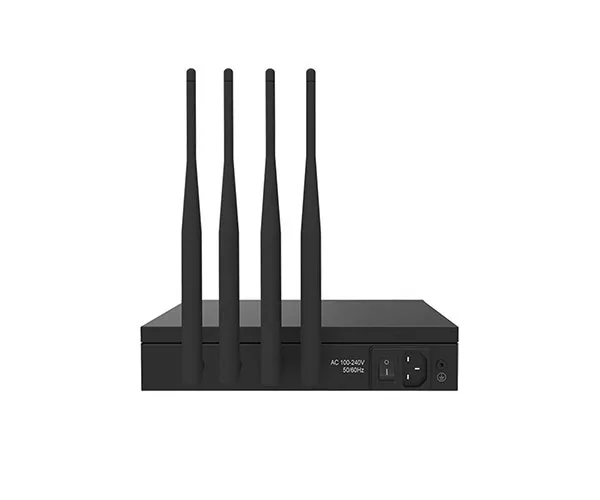
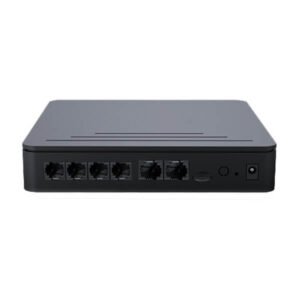
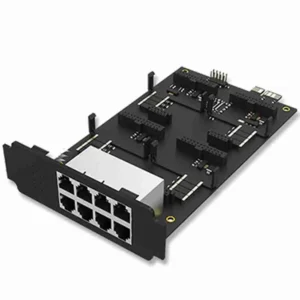
Yeastar TG400L 4-Port LTE/4G VoIP Gateway | Next-Generation Cellular Connectivity for the Modern Enterprise
The world’s mobile networks are evolving — and businesses that built their GSM gateway strategies on 2G infrastructure are facing an increasingly urgent question. As carriers worldwide accelerate their 2G and 3G network sunset programs, the cellular trunks that have been quietly saving businesses thousands of dollars every month are approaching an expiration date. The solution is not to abandon the GSM gateway strategy that delivers such compelling cost savings and redundancy benefits. The solution is to evolve it — to the same proven four-channel architecture, running on the network technology that will define mobile communications for the next decade.
The Yeastar TG400L 4-Port LTE/4G VoIP Gateway is that evolution. Everything businesses have come to depend on from Yeastar’s TG400 platform — four independent channels, simultaneous call handling, multi-carrier on-net savings, deep redundancy, SMS gateway capability, and seamless SIP integration — now reborn on 4G LTE technology. Faster. More reliable. Wider coverage. Future-proof by design.
This is not merely an upgrade. It is a fundamental advancement in what a cellular VoIP gateway can deliver — bringing the bandwidth efficiency of 4G LTE, the voice quality of modern codec technology, and the network availability of the world’s most widely deployed mobile infrastructure generation to your IP PBX trunk strategy.
What Is the Yeastar TG400L LTE/4G VoIP Gateway?
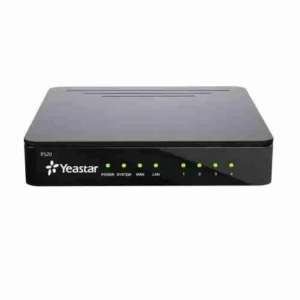
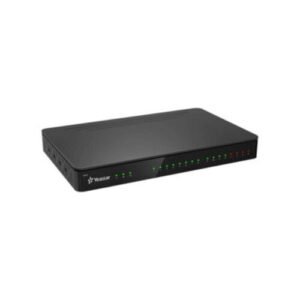
The Yeastar TG400L is a professional-grade, 4-port LTE/4G VoIP Gateway that simultaneously connects four independent 4G LTE cellular channels to your IP PBX or VoIP phone system via fully standards-compliant SIP protocol. Each of the four ports accommodates its own independent SIM card — operating on your carrier’s 4G LTE network for voice and data services — and presents that cellular connection to your PBX as a standard SIP trunk with complete feature parity to any other trunk type in your infrastructure.
The defining distinction between the TG400L and its TG400 predecessor is the cellular generation it operates on. Where the TG400 connects via GSM/2G networks, the TG400L harnesses 4G LTE — the network infrastructure that carriers have invested hundreds of billions of dollars building, optimizing, and expanding globally, and which will remain the foundational mobile network layer for the foreseeable future even as 5G deployment accelerates.
For businesses in regions where 2G network sunset is already underway or imminent — and for forward-thinking organizations that want to build cellular trunk infrastructure on technology with a long operational runway — the TG400L is the definitive choice.
The Yeastar TG400L Is the Essential Solution For:
- Businesses in markets with active 2G/3G network sunset programs where GSM gateway viability has a defined end date
- Organizations requiring maximum cellular voice quality — 4G LTE delivers superior audio fidelity over 2G GSM connections
- High-volume call centers and contact operations where four simultaneous LTE-quality cellular channels are a daily operational requirement
- Enterprises building future-proof cellular trunk infrastructure that will remain viable for a decade or more without technology refresh
- Logistics, dispatch, and field service operations coordinating large mobile workforces across 4G LTE-dominant geographic areas
- Healthcare organizations managing high-volume patient communication with the quality and reliability that patient care demands
- IT administrators and MSPs delivering next-generation cellular gateway solutions to clients whose 2G infrastructure has a sunset deadline
- Multi-carrier cost optimization deployments requiring four independent LTE SIM channels for maximum on-net savings coverage
- Business continuity architects building layered cellular failover strategies on the most robust available mobile network generation
- High-volume SMS and data-integrated operations leveraging 4G LTE’s superior data throughput for advanced messaging workflows
- Businesses in rural or developing-market locations where 4G LTE infrastructure is more widely deployed than legacy 2G networks
- Organizations transitioning from TG400 GSM gateways as their carriers announce 2G network decommissioning timelines
The 4G LTE Advantage — Why Network Generation Matters for Your Business
Before exploring the TG400L’s features in depth, it is worth understanding precisely why the shift from GSM to 4G LTE is not merely a technical specification change — it is a fundamental improvement in the quality, reliability, and longevity of your cellular trunk infrastructure.
📶 Superior Network Coverage and Availability
Carriers worldwide have invested incomparably more in their 4G LTE infrastructure than in legacy 2G networks. LTE towers are more densely deployed, better maintained, carry higher capacity, and benefit from continuous investment in optimization and expansion. In urban environments, 4G LTE coverage is essentially ubiquitous. In suburban and many rural areas, 4G LTE reach now matches or exceeds legacy 2G coverage. In any location where both 2G and 4G are available, 4G LTE is the stronger, more reliable signal.
For cellular gateway deployments, this means fewer registration drops, fewer call failures, and more consistent voice quality than GSM connections — even in locations where 2G used to perform adequately.
🔊 Enhanced Voice Quality Over LTE
4G LTE networks support HD Voice (Wideband AMR-WB codec) at the network level — a voice encoding standard that delivers dramatically superior audio fidelity compared to the narrowband codecs available on 2G GSM. Calls made through the TG400L over an LTE network with HD Voice support sound richer, clearer, and more natural than equivalent calls over 2G — closer to the wideband audio quality your IP desk phones already deliver on internal calls.
For customer-facing operations where call quality directly influences customer experience and professional perception, the audio improvement that 4G LTE enables is a tangible, audible upgrade that your customers will notice and appreciate.
🌐 Future-Proof Technology — Built for the Next Decade
The global 2G network sunset is not a distant theoretical concern — it is an active, accelerating reality. Major carriers across the United States, Australia, Japan, South Korea, Singapore, and numerous European markets have already completed 2G decommissioning. Many more have announced firm sunset dates within the next two to four years. Businesses that deploy GSM gateways today in these markets are building on infrastructure with a defined expiration date.
4G LTE faces no comparable sunset horizon. With 5G deployment focused on new use cases and enhanced data services rather than replacing 4G voice and SMS infrastructure, LTE networks are expected to remain the backbone of mobile voice services globally for at minimum the next ten years. The TG400L is cellular gateway infrastructure that will deliver operational value well into the 2030s — without requiring a technology refresh as 2G networks disappear.
⚡ Superior Data Channel for Advanced Integration
4G LTE’s high-speed data capability opens integration possibilities that 2G’s limited GPRS data channel cannot support. Advanced SMS workflows, real-time gateway monitoring, firmware updates, and API integrations all benefit from the TG400L’s LTE data connectivity — delivering faster response times, more reliable API communication, and richer integration potential with business applications and platforms.
Yeastar TG400L Key Features — Four LTE Channels Engineered for Enterprise Performance
📡 4 Fully Independent 4G LTE Ports — Quad-Channel Next-Generation Connectivity
The TG400L’s four LTE ports are genuine, hardware-level independent cellular modules — not virtualized channels or shared resources. Each port maintains its own independent:
- 4G LTE network registration and cellular attachment
- Active call state — completely isolated from other ports
- SIM account management — USSD, SMS, and data independently operated
- SIP trunk registration with your PBX — each port presents as a separate SIP trunk
- Voice quality management — HD Voice codec negotiation independent per channel
This true four-way independence means simultaneous calls on all four ports maintain full audio quality with zero cross-channel interference, degradation, or resource contention.
- Supports 4G LTE with automatic fallback to 3G/2G where LTE is unavailable — ensuring connectivity in fringe coverage areas
- Universal LTE band support across the key frequency bands deployed by major carriers globally
- Each port accepts a standard Nano or Micro SIM card — verify slot format specification for your specific hardware revision
- All four ports operate at full LTE performance simultaneously with no throughput sharing or quality compromise
💰 Four-Carrier LTE On-Net Optimization — Maximum Savings on the Modern Network
The cost optimization logic that makes GSM gateways compelling applies equally — and in some markets even more powerfully — to 4G LTE gateways. Mobile carriers charge significantly higher rates for fixed-to-mobile calls (calls from a VoIP SIP trunk to a mobile number) than for on-net mobile-to-mobile calls (calls from one subscriber on the same network to another). The TG400L exploits this pricing differential at four-carrier scale:
- Port 1 SIM — Carrier A: Routes calls to all Carrier A mobile subscribers at on-net rates
- Port 2 SIM — Carrier B: Routes calls to all Carrier B mobile subscribers at on-net rates
- Port 3 SIM — Carrier C: Routes calls to all Carrier C mobile subscribers at on-net rates
- Port 4 SIM — Carrier D: Routes calls to all Carrier D mobile subscribers at on-net rates
With four carrier SIMs covering the major networks in virtually any market, your PBX routes every outbound mobile call through the on-net LTE channel — and the premium fixed-to-mobile rate that your SIP trunk provider charges for those calls becomes irrelevant. For businesses making hundreds of mobile calls per day, this four-carrier LTE on-net strategy delivers annual savings that substantially exceed the gateway’s hardware cost within the first month of operation.
🔄 Four-Layer LTE Redundancy — The Deepest Cellular Failover Available
Combining 4G LTE’s inherently superior network reliability with the TG400L’s four-port architecture creates a failover infrastructure of exceptional depth:
- Internet and SIP trunk failure → automatic failover to TG400L Port 1 (Carrier A LTE)
- Carrier A LTE disruption → automatic failover to Port 2 (Carrier B LTE)
- Carrier B also disrupted → automatic failover to Port 3 (Carrier C LTE)
- Carrier C unavailable → automatic failover to Port 4 (Carrier D LTE)
The probability of four independent LTE carriers on four independent network infrastructures experiencing simultaneous outages in the same geographic area is statistically negligible in any realistic operating environment. For organizations where communication continuity is a regulatory requirement, a contractual obligation, or simply a business imperative — the TG400L’s four-layer LTE redundancy architecture delivers the highest achievable level of cellular trunk availability from a single gateway device.
📞 Four Simultaneous LTE Calls — Zero Compromise on Call Capacity
Four genuinely independent LTE channels mean four genuinely simultaneous calls — handled concurrently with full 4G LTE voice quality on every channel:
- Four agents simultaneously making outbound mobile calls with no channel contention
- Simultaneous inbound and outbound calls across all four ports without priority conflicts
- Peak-hour mobile call volumes that would overwhelm single or dual-channel gateways flow effortlessly through four LTE channels
- Load balancing distributes concurrent calls across available ports automatically for optimal channel utilization
- No call queuing, no channel-busy failures, no overflow to expensive SIP trunk rates during busy periods
For any environment where mobile calls are a constant operational activity rather than an occasional occurrence, four simultaneous LTE channels ensures the gateway is always ready when the next call needs to be made — regardless of how many calls are currently active.
🌐 4G LTE Data Integration — Advanced Gateway Intelligence
The TG400L’s 4G LTE connectivity delivers data channel capabilities that transform how the gateway integrates with your broader IT and communication infrastructure:
- High-speed firmware updates over LTE — keep all four ports current with the latest features and security patches without degrading voice call performance
- Real-time monitoring data delivered faster and more reliably over LTE than 2G GPRS connections
- API communication with business applications at LTE speeds — faster SMS API response times, lower latency webhook delivery, and more reliable integration performance
- Remote management accessibility — the LTE data channel provides a robust, independent management path to the gateway even when local network issues might otherwise disrupt access
- Enhanced SMS throughput — 4G LTE’s superior data channel supports faster SMS sending and receiving rates compared to 2G GPRS-based SMS delivery
⚙️ Unified Four-Port LTE Management Interface — Complete Control, Single Dashboard
Administering four independent LTE channels is made elegantly simple by the TG400L’s comprehensive web-based management portal:
- Simultaneous four-port status display — LTE signal strength, carrier name, network registration status, and active call state for all four ports visible at a glance
- Per-port LTE band monitoring — identify which LTE frequency band each port is operating on for signal optimization and troubleshooting
- Independent port routing configuration — assign completely different dial plan rules, PBX trunk registrations, and call handling behaviors to each port independently
- Port-level USSD management — send carrier USSD commands to any individual SIM from the web interface without disrupting other ports
- Unified SMS console — send and receive SMS across all four LTE channels from a single messaging management interface
- Port grouping for advanced routing — create logical groups for load balancing, round-robin distribution, or cascading failover across any combination of the four ports
- Consolidated call logs — unified call history filterable by individual port for granular traffic analysis, cost attribution, and reporting
- Simultaneous firmware deployment — update all four LTE modules in a single operation
📩 Quad-Channel LTE SMS Gateway — Next-Generation Business Messaging
The TG400L’s four LTE-connected SMS channels deliver business messaging capability that approaches enterprise SMS platform performance at a fraction of the subscription cost:
- Four simultaneous inbound SMS streams — receive messages from customers, suppliers, automated systems, and two-factor authentication requests on four distinct mobile numbers concurrently
- High-throughput distributed outbound SMS — spread large-volume campaigns across all four LTE SMS channels simultaneously for maximum delivery speed
- LTE-enhanced SMS reliability — 4G LTE networks deliver superior SMS delivery rates and confirmation speed compared to 2G GPRS SMS infrastructure
- Carrier-diverse SMS routing — route outgoing SMS through the SIM on the same network as the recipient for optimal delivery rates and reduced carrier filtering of high-volume sending
- Dedicated SMS port configuration — reserve one or two ports exclusively for SMS operations while remaining ports handle voice calls — voice and messaging never compete for channel resources
- Full API integration — connect CRM platforms, marketing automation tools, appointment booking systems, ERP workflows, and customer notification engines to four LTE SMS channels simultaneously
Full Technical Specifications
| Specification | Detail |
|---|---|
| Cellular Ports | 4 (Fully Independent) |
| Cellular Technology | 4G LTE with 3G/2G Fallback |
| SIM Card Format | Per port — verify with specific unit revision |
| LTE Frequency Bands | Multi-band — major global LTE frequencies supported |
| Simultaneous Calls | 4 (1 per port) |
| Voice Codec (LTE) | AMR-WB (HD Voice), G.711, G.729, G.723 |
| Network Interface | 1 × RJ45 10/100 Mbps Ethernet |
| VoIP Protocol | SIP (RFC 3261) |
| DTMF Mode | RFC 2833, SIP INFO, In-band |
| SMS Support | Yes — Send and Receive (All 4 Ports) |
| USSD Support | Yes (All 4 Ports Independently) |
| Management Interface | Web GUI (HTTP/HTTPS) |
| Configuration | Web browser — no software required |
| Firmware Updates | Remote, web-based |
| Port Grouping | Yes — load balancing and failover groups |
| Power Supply | 12V DC Adapter (included) |
| Power Consumption | ≤ 15W |
| Operating Temperature | 0°C to 40°C (32°F to 104°F) |
| Compatibility | Any SIP RFC 3261-compliant IP PBX |
| Network Fallback | Automatic 3G/2G fallback when LTE unavailable |
| Regulatory | CE, FCC certified |
TG400L vs TG400 — Understanding the Critical Differences
For businesses evaluating whether to deploy the LTE TG400L or the GSM TG400, the decision framework is clear and increasingly straightforward:
| Dimension | TG400 (GSM/2G) | TG400L (LTE/4G) |
|---|---|---|
| Network Technology | 2G GSM | 4G LTE |
| Voice Quality | Narrowband (standard) | HD Voice capable (wideband) |
| Network Longevity | Sunset underway in many markets | 10+ year operational runway |
| Coverage Reliability | Declining as carriers decommission 2G | Expanding as carriers invest in LTE |
| Data Channel Speed | GPRS (2G — very limited) | 4G LTE (high-speed) |
| SMS Reliability | GPRS-based — adequate | LTE-enhanced — superior |
| Carrier Compatibility | Markets with active 2G coverage | All markets — present and future |
| HD Voice Support | No | Yes (carrier dependent) |
| Future Investment Risk | High — sunset timeline risk | Low — long operational runway |
| Ideal Deployment | Markets with strong 2G, no sunset risk | All markets, especially sunset-affected |
The bottom line: If your market has already announced 2G sunset dates, the TG400L is not merely the better choice — it is the only viable long-term choice. If your market still has robust 2G coverage with no sunset announcement, the TG400L still delivers superior voice quality, better reliability, and eliminates future technology refresh costs. In virtually all scenarios, the TG400L represents the smarter investment.
Yeastar TG400L vs. Competing LTE Gateways — The Professional Grade Difference
✅ Universal SIP Compliance — No Ecosystem Lock-In
The TG400L’s full SIP RFC 3261 compliance ensures compatibility with every SIP-capable IP PBX platform on the market — Yeastar, Asterisk, FreePBX, 3CX, Grandstream UCM, Cisco, Avaya, and any other standards-based system. There are no proprietary protocols, no mandatory platform subscriptions, and no vendor lock-in that constrains your PBX choices today or in the future.
✅ Yeastar Native Integration — First-Class PBX Ecosystem Support
For Yeastar P-Series and S-Series PBX deployments, the TG400L integrates with native auto-discovery, simplified SIP trunk registration, and tight management platform integration — reducing deployment time and operational complexity compared to third-party LTE gateway alternatives. The Yeastar ecosystem advantage is amplified when gateway and PBX are from the same manufacturer.
✅ Automatic Network Fallback — Never Lose Connectivity
When LTE signal is temporarily unavailable — in basements, fringe coverage areas, or during rare LTE outages — the TG400L automatically falls back to 3G and 2G networks where available, maintaining cellular connectivity without manual intervention. Once LTE signal is restored, the gateway automatically reattaches to the 4G network. This intelligent network fallback ensures maximum gateway uptime even in challenging signal environments.
✅ Proven Yeastar Firmware — Stability You Can Depend On
Yeastar’s firmware development and quality assurance track record across the entire TG gateway series is well-established and highly regarded in the professional telecommunications community. Regular updates address security vulnerabilities, add features, and maintain compatibility with evolving carrier network configurations and PBX platform requirements. The TG400L benefits from the same firmware maturity that has made Yeastar gateways a trusted choice for IT professionals and MSPs worldwide.
✅ Professional Certification and Compliance — Regulatory Peace of Mind
The TG400L is manufactured to professional telecommunications standards with CE and FCC certification — ensuring regulatory compliance in major global markets and eliminating the legal and operational risks associated with uncertified gray-market cellular gateway alternatives.
Advanced Routing Strategies — Maximizing Four-Channel LTE Performance
Strategy 1 — Multi-Carrier LTE On-Net Maximization
The definitive cost optimization configuration: one SIM from each of the four largest LTE carriers in your market. Configure PBX dial plan rules to analyze outbound call destination numbers and automatically route each call through the port whose SIM shares the same carrier network. Near-complete on-net rate coverage across all mobile call destinations — maximum possible cost reduction from a four-port LTE gateway.
Strategy 2 — Inbound and Outbound LTE Channel Dedication
Assign Ports 1 and 2 exclusively to inbound calls — publish the two SIM numbers as customer-facing contact numbers for different departments or service lines. Assign Ports 3 and 4 exclusively to outbound agent-initiated calls. Clean channel separation ensures inbound customer calls and outbound agent calls never compete for LTE channel resources during peak communication periods.
Strategy 3 — Cascading LTE Failover Architecture
Configure a four-level failover cascade: primary SIP trunk → Port 1 LTE (Carrier A) → Port 2 LTE (Carrier B) → Port 3 LTE (Carrier C) → Port 4 LTE (Carrier D). Four independent LTE carriers provide essentially unlimited cellular redundancy depth — the statistical probability of complete communication failure across all five trunk sources simultaneously approaches zero in any realistic scenario.
Strategy 4 — LTE Load Balancing With Intelligent Overflow
Configure Ports 1 and 2 as the primary load-balanced active LTE channels for normal call traffic, distributing outbound calls in round-robin fashion. Configure Ports 3 and 4 as overflow channels that activate automatically when both primary ports are simultaneously occupied. This strategy maximizes SIM plan efficiency on the primary ports while ensuring four-channel capacity is always available during peak demand periods.
Strategy 5 — Voice and LTE-Enhanced SMS Hybrid Deployment
Assign two ports to voice call handling with carrier-optimized routing. Assign the remaining two ports exclusively to high-volume SMS gateway operations — leveraging LTE’s superior data throughput for faster, more reliable bulk SMS delivery. Business automation, customer notification, and marketing messaging workflows run through dedicated SMS channels with no voice call interference.
Real-World Deployment Scenarios — TG400L Delivering Next-Generation Results
🚑 Emergency Response and Healthcare Coordination
A regional healthcare network coordinates patient transfers, ambulance dispatch, and inter-facility communication across a large geographic area where staff and vehicles operate exclusively on mobile numbers. The TG400L’s four LTE channels handle simultaneous dispatch calls at HD Voice quality — clearer, more intelligible communication in high-stress scenarios where audio clarity is not a preference but a patient safety requirement. Four-carrier LTE redundancy ensures the dispatch system is never offline during a medical emergency.
✈️ Travel and Tourism Operation
A travel company with reservation staff handling simultaneous calls to suppliers, tour guides, transport providers, and accommodation partners across different carrier networks deploys the TG400L at their central booking office. Four LTE channels handle peak booking season call volumes without channel contention. Automated SMS confirmations route through dedicated SMS ports while voice channels remain fully available for reservation calls. Every supplier interaction is logged and recorded in the central PBX system.
🏗️ Construction Project Management
A construction company coordinating large sites where fixed-line infrastructure is unavailable deploys the TG400L as the primary SIP trunk for a local IP PBX at the site office. Four independent LTE channels provide full inbound and outbound calling capability — including simultaneous calls to site managers, safety officers, material suppliers, and subcontractors — without any fixed-line broadband dependency. Project communication operates reliably on 4G LTE infrastructure regardless of fixed-line availability.
🏦 Financial Services Branch With Compliance Requirements
A financial services branch office deploys the TG400L for both cost optimization and business continuity. Primary SIP trunks handle the majority of call traffic. All calls to client mobile numbers route through the appropriate on-net LTE channel for cost savings. Every call — regardless of which trunk it uses — is recorded and logged in the central PBX for regulatory compliance. When the branch experiences internet outages, four LTE failover channels maintain full communication capability for client-facing advisors.
🌍 Emerging Market Operations Center
A multinational organization operating in an emerging market where 4G LTE infrastructure is more extensively deployed than legacy fixed-line broadband deploys the TG400L as the primary trunk infrastructure for their local operations. Four LTE SIMs covering all major local carriers provide both cost-optimized mobile calling and the most reliable available connectivity for the PBX’s external communications — all on the same device.
Frequently Asked Questions About the Yeastar TG400L
How does the TG400L handle areas with weak or no LTE signal?
The TG400L features automatic network fallback — when LTE signal drops below a usable threshold, each affected port automatically connects to the strongest available network (3G or 2G) to maintain cellular connectivity. Once LTE signal is restored, the port automatically reattaches to 4G. This intelligent fallback operates independently per port, so a single port in a weak signal area does not affect the LTE connectivity of other ports operating in better signal conditions.
Is the Yeastar TG400L compatible with VoLTE (Voice over LTE)?
VoLTE support depends on the specific carrier’s LTE network implementation and the TG400L’s firmware configuration for that carrier. The TG400L is designed to leverage LTE network voice capabilities where available. Contact Yeastar or your authorized reseller for confirmation of VoLTE compatibility with your specific carriers and the current firmware version — VoLTE support details can evolve with firmware updates as carrier configurations are validated.
Can I use the TG400L in a country where 2G has already been shut down?
Absolutely — this is one of the primary deployment scenarios the TG400L is designed for. In markets where 2G GSM networks have been decommissioned, the TG400L’s 4G LTE connectivity ensures your cellular gateway infrastructure continues operating on the available network infrastructure. Organizations that deployed TG400 GSM gateways in sunset markets are migrating to the TG400L as the direct replacement that maintains their cost optimization and redundancy strategies on LTE.
How does the TG400L integrate with 3CX Phone System?
In 3CX, register each TG400L port as an independent SIP trunk provider using the gateway’s IP address and each port’s SIP account credentials. Configure outbound call rules in 3CX to route the appropriate call types — mobile number destinations, specific prefixes, or all outbound calls — through the relevant TG400L trunk. Inbound DID numbers associated with each SIM route to the appropriate 3CX extension, ring group, or IVR. Yeastar provides detailed 3CX integration documentation, and the configuration process is straightforward for any experienced 3CX administrator.
What is the difference between the TG400L and TG800L?
The TG400L provides 4 LTE ports and 4 simultaneous calls, making it the ideal solution for medium-to-high volume SME deployments where four channels delivers sufficient capacity. The TG800L doubles the architecture to 8 LTE ports and 8 simultaneous calls — targeting high-volume call centers, large enterprise deployments, and environments requiring eight-carrier LTE on-net coverage or eight-layer cellular redundancy. If your peak simultaneous mobile call requirement reliably stays within four channels, the TG400L delivers the complete Yeastar LTE gateway feature set at the optimal capacity and investment level.
Does the TG400L support remote management and configuration?
Yes. The TG400L’s web-based management interface is accessible remotely via HTTPS from any network-connected browser — subject to your firewall and network access control configuration. For centralized management of multiple TG400L units across distributed sites, Yeastar’s ecosystem management tools provide consolidated oversight. Remote firmware updates, configuration changes, and status monitoring are all fully supported without requiring physical access to the device.
What SIM card format does the Yeastar TG400L use?
SIM card format specifics should be confirmed against the current hardware revision documentation, as Yeastar has used varying SIM formats across TG series revisions. Contact your authorized Yeastar reseller or check the current product datasheet to confirm the SIM format — Nano SIM, Micro SIM, or Mini SIM — for the specific TG400L unit you are purchasing. This ensures you order the correct SIM format from your carrier at the time of deployment.
The Future of Cellular Gateway Technology Is LTE — And It Starts Now
The cellular trunk strategy that has saved businesses money, provided communication redundancy, and integrated mobile networks into business phone systems is not going away. It is evolving — and the Yeastar TG400L is the vehicle for that evolution.
Four channels of 4G LTE connectivity deliver everything the TG400 GSM gateway provided — and then significantly more. Better voice quality. Superior network reliability. Longer technology runway. Enhanced data integration. Immunity to 2G sunset risk. The same proven Yeastar gateway architecture, management simplicity, SIP compatibility, and cost optimization strategy — now powered by the mobile network generation that will define business cellular connectivity for the next decade.
For businesses already operating TG400 GSM gateways, the TG400L is the upgrade path that protects your investment in the cellular trunk strategy while future-proofing the technology it runs on. For businesses deploying cellular gateway infrastructure for the first time, the TG400L is the only logical choice — building on LTE from day one rather than deploying on technology with a sunset clock ticking.
Four LTE channels. Four independent carrier connections. Four simultaneous calls at HD Voice quality. One device that makes your cellular communication infrastructure smarter, more reliable, more cost-effective, and genuinely ready for whatever the next decade of mobile network evolution brings.
Reviews
There are no reviews yet.