
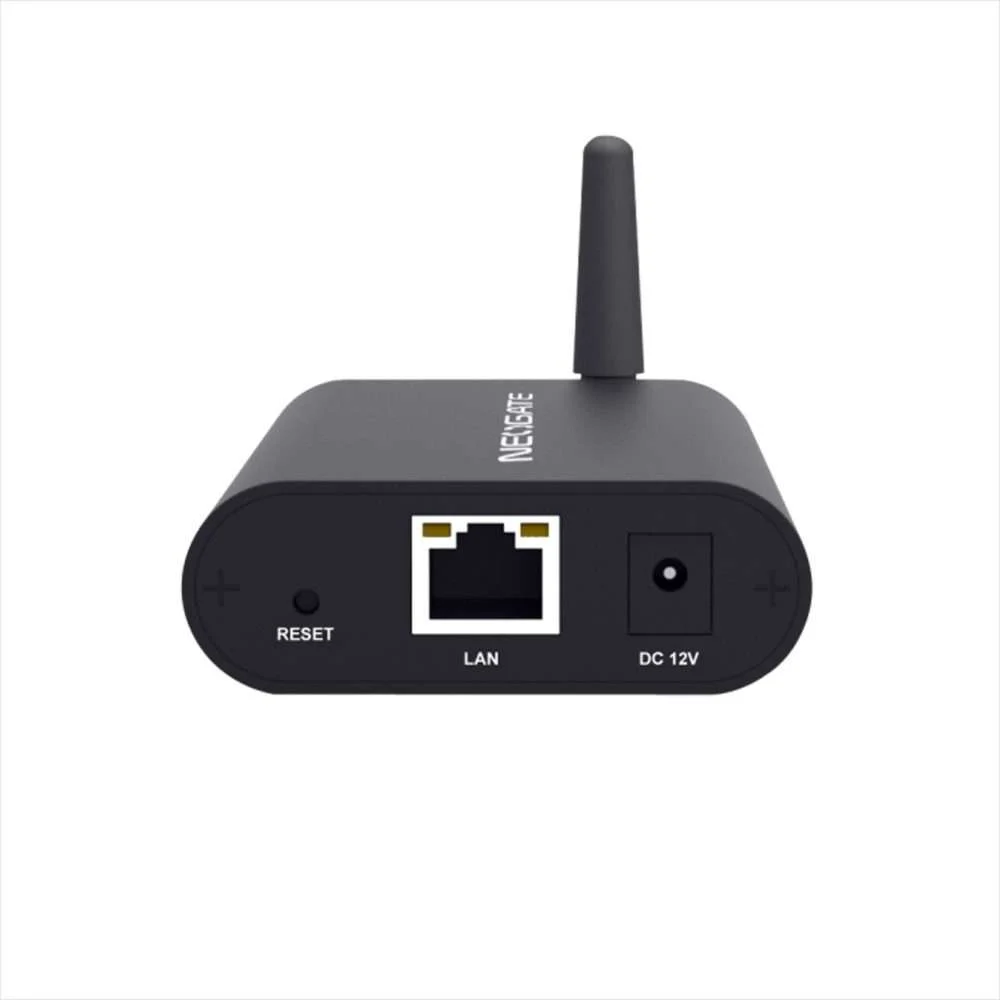
Yeastar TG100 VoIP GSM Gateway | Bridge Your Mobile Network and IP PBX Seamlessly
Every business has a silent cost center hiding in plain sight — and for most organizations, it lives inside the monthly mobile phone bill. Thousands of dollars spent routing calls through expensive cellular carrier plans, disconnected from your PBX, invisible to your reporting tools, and completely beyond the reach of your unified communications strategy. The Yeastar TG100 VoIP GSM Gateway closes that gap permanently — connecting your cellular network directly to your IP PBX and transforming expensive, unmanaged mobile calls into cost-effective, centrally controlled business communication.
This is the device that unifies what was always fragmented. The bridge that makes your IP phone system and your mobile network speak the same language. The tool that puts your IT team back in control of every call — regardless of which network it travels on.
What Is the Yeastar TG100 GSM VoIP Gateway?
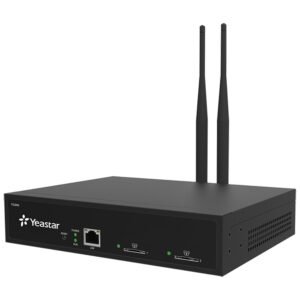
The Yeastar TG100 is a professional-grade, 1-port GSM VoIP Gateway that creates a seamless, intelligent connection between your organization’s GSM cellular network and your IP PBX or VoIP phone system. By converting GSM signals into SIP protocol — and SIP back into GSM — the TG100 allows calls to flow freely between your mobile network and your business phone system, unlocking significant cost savings, enhanced mobility, and centralized call management.
In practical terms, the TG100 acts as a SIM-based trunk gateway — inserting a standard SIM card from any GSM carrier and presenting that mobile connection to your PBX as a standard SIP trunk. Your PBX routes calls through it exactly as it would any other trunk line — with full visibility, full control, and full integration into your existing call routing, recording, and reporting infrastructure.
The Yeastar TG100 Is the Right Solution For:
- Small and medium businesses looking to reduce mobile calling costs by routing calls through competitive GSM carrier plans
- Organizations in regions where GSM termination rates are lower than traditional PSTN or SIP trunk rates
- Businesses in areas with unreliable fixed-line infrastructure that need cellular connectivity as a primary or backup trunk
- Companies deploying IP PBX systems in locations where SIP trunking from carriers is unavailable or cost-prohibitive
- Remote offices and branch locations needing a simple, affordable trunk connection without dedicated leased lines
- IT administrators and MSPs managing multi-site communication networks requiring flexible, portable trunk solutions
- Businesses with high mobile-to-mobile call volumes wanting to leverage on-net calling discounts from mobile carriers
- Developing markets and emerging economies where GSM infrastructure is more mature and accessible than fixed broadband
How the Yeastar TG100 Works — Elegantly Simple, Powerfully Effective
Understanding the TG100’s value begins with understanding the problem it solves. In a traditional business environment, your IP PBX handles all desk phone calls — but mobile calls made from staff smartphones sit entirely outside your phone system. They’re unrecorded, unrouted, invisible to your call reporting, and billed separately at whatever rate your mobile carrier charges.
The Yeastar TG100 changes this dynamic entirely through a straightforward, three-stage process:
Step 1 — Insert Your SIM Card Place a standard GSM SIM card from your preferred mobile carrier into the TG100’s SIM slot. This gives the gateway a live cellular connection with its own mobile number, using your carrier’s calling plan and rates.
Step 2 — Connect to Your Network and PBX Connect the TG100 to your local network via its Ethernet port. Register it as a SIP trunk on your IP PBX — Yeastar, Asterisk, FreePBX, 3CX, or any SIP-compatible system. The gateway is now visible to your PBX as a standard outbound and inbound trunk.
Step 3 — Route Calls Intelligently Configure your PBX dial plan to route specific call types — mobile numbers, international calls, or all outbound calls — through the TG100’s GSM connection. Inbound calls to the SIM’s mobile number route through the gateway to your PBX extensions. Your entire team benefits from the cost savings and integration, transparently.
The result: mobile calling that is managed, monitored, recorded, and cost-optimized — all from within your existing IP PBX infrastructure.
Yeastar TG100 Key Features — Maximum Value in Minimal Hardware
📡 1-Port GSM Trunk — Focused, Reliable Cellular Connectivity
The TG100’s single GSM port is not a limitation — it is a deliberate design choice that makes the gateway affordable, compact, and purpose-fit for small businesses, branch offices, and single-location deployments that need exactly one reliable cellular trunk without the cost or complexity of a multi-port chassis.
- Supports standard GSM 850/900/1800/1900 MHz frequency bands for broad global carrier compatibility
- Accepts any standard Mini SIM (2FF) card from any GSM carrier worldwide
- Delivers a stable, dedicated cellular trunk with no shared bandwidth or contention
- For businesses needing more simultaneous GSM channels, Yeastar’s scalable TG series offers multi-port options — the TG200, TG400, TG800, and beyond — all sharing the same management interface and configuration philosophy
🔄 Full SIP Protocol Compliance — Works With Your Existing PBX
The TG100 is a fully standards-compliant SIP gateway, meaning it integrates with virtually any IP PBX or UC platform that speaks SIP — which is essentially all of them. There are no proprietary protocols, no vendor lock-in, and no costly middleware required.
Confirmed compatible platforms include:
- Yeastar P-Series and S-Series PBX — native integration with auto-discovery
- Asterisk and FreePBX — seamless SIP trunk registration
- 3CX Phone System — works as a standard SIP trunk provider
- Grandstream UCM Series — compatible SIP gateway configuration
- Cisco Unified Communications Manager — SIP gateway integration
- Avaya IP Office — SIP trunk connectivity
- Any RFC 3261-compliant SIP PBX — universal compatibility
💰 GSM Cost Optimization — Slash Your Mobile Calling Expenditure
This is the feature that drives the purchasing decision for most organizations: the TG100 delivers meaningful, measurable cost reduction on mobile calling from day one.
The savings mechanism works on a simple principle: on-net calling. When your PBX routes calls destined for mobile numbers through the TG100’s GSM connection, those calls are placed from one mobile number to another — qualifying for your carrier’s on-net rate, which is frequently significantly lower than off-net or fixed-to-mobile rates.
Depending on your carrier’s plan structure and call volume, businesses regularly experience:
- Dramatic reduction in fixed-to-mobile call costs — one of the most expensive call categories in traditional business telephony
- Elimination of per-minute charges when calling mobile numbers on the same network as the gateway’s SIM
- Flat-rate unlimited calling benefits when using carrier plans with unlimited on-net calling
- Avoidance of international roaming charges by routing international mobile calls through locally-inserted SIMs in target countries
For businesses with high mobile call volumes, the TG100 frequently delivers a return on investment within weeks of deployment.
🛡️ Automatic Failover — Communication Continuity When You Need It Most
Internet outages happen. SIP trunk providers experience downtime. The Yeastar TG100 serves as an invaluable failover trunk for business continuity planning:
- Configure your PBX to automatically route calls through the TG100’s GSM connection when primary SIP trunks become unavailable
- Maintain inbound and outbound calling capability during broadband outages — the TG100 only requires a cellular signal and local network connectivity
- Ensure your business remains reachable and operational even during ISP-level failures that would otherwise take your phone system completely offline
- For businesses in areas with unreliable broadband infrastructure, the TG100 can function as the primary trunk — delivering consistent calling capability independent of fixed-line internet quality
⚙️ Web-Based Management Interface — Configure Once, Manage Effortlessly
The TG100’s intuitive web-based management portal puts full configuration control at your fingertips without requiring specialist training or CLI expertise:
- SIP account configuration — register the gateway as a trunk on your PBX in minutes
- Call routing rules — define precisely which calls route through the GSM channel
- USSD command support — send carrier USSD codes directly from the web interface to check balance, activate packages, or manage your SIM account
- SMS sending and receiving — use the TG100 as an SMS gateway, enabling your PBX or business applications to send and receive text messages through the cellular network
- Real-time status monitoring — signal strength, call activity, SIM status, and network registration displayed live
- System logs and diagnostics — comprehensive logging for troubleshooting and audit purposes
- Firmware update management — keep the gateway current with the latest features and security patches
📩 SMS Gateway Functionality — Unlock Two-Way Business Messaging
One of the TG100’s most underappreciated capabilities is its built-in SMS gateway functionality. Beyond voice calls, the TG100 enables your business to leverage the cellular network for text message communication:
- Inbound SMS — receive text messages sent to the gateway’s SIM number, forwarded to email or integrated applications
- Outbound SMS — send text messages from your business systems through the TG100’s cellular connection
- API-driven SMS — integrate with business applications, CRM platforms, ticketing systems, and automation workflows via the SMS API
- PBX notification messages — trigger automated SMS alerts for voicemails, missed calls, or system events
- Two-factor authentication (2FA) delivery — use the TG100 to deliver SMS verification codes for business applications
For businesses that need cost-effective, integrated SMS capability without a separate SMS platform subscription, the TG100’s built-in messaging functionality delivers surprising additional value.
Full Technical Specifications
| Specification | Detail |
|---|---|
| GSM Ports | 1 |
| SIM Card Format | Mini SIM (2FF) |
| GSM Frequency Bands | 850 / 900 / 1800 / 1900 MHz |
| Network Interface | 1 × RJ45 10/100 Mbps Ethernet |
| VoIP Protocol | SIP (RFC 3261) |
| Audio Codecs | G.711 (a/μ-law), G.729, G.723 |
| DTMF Mode | RFC 2833, SIP INFO, In-band |
| SMS Support | Yes — Send and Receive |
| USSD Support | Yes |
| Management Interface | Web GUI (HTTP/HTTPS) |
| Configuration | Web browser — no software required |
| Firmware Updates | Remote, web-based |
| Power Supply | 12V DC Adapter (included) |
| Power Consumption | ≤ 5W |
| Operating Temperature | 0°C to 40°C (32°F to 104°F) |
| Dimensions | Compact desktop form factor |
| Compatibility | Any SIP RFC 3261-compliant IP PBX |
| Regulatory | CE, FCC certified |
Yeastar TG100 vs. Alternatives — Why It Is the Smart Choice
🆚 TG100 vs. No GSM Gateway (Direct SIP Trunking Only)
Without a GSM gateway, every call your PBX makes to a mobile number travels through your SIP trunk provider — at fixed-to-mobile rates that are often two to five times more expensive than on-net mobile-to-mobile rates. The TG100 eliminates this premium, routing mobile-destined calls directly through a GSM carrier connection at dramatically reduced cost. For businesses with significant mobile call volumes, this difference compounds rapidly into thousands of dollars in annual savings.
🆚 TG100 vs. Hosted SMS Platforms
Standalone SMS platform subscriptions charge per-message fees that accumulate quickly for businesses sending high volumes of notifications, confirmations, and alerts. The TG100’s built-in SMS gateway, powered by your existing SIM plan, delivers the same capability at a fraction of the ongoing cost — with no per-message billing after the initial hardware investment.
🆚 TG100 vs. Multi-Port GSM Gateways
If your organization needs a single GSM trunk for a branch office, a backup connection, or a low-to-medium volume deployment, the TG100’s single-port design is the optimal choice — delivering the full Yeastar feature set at the most accessible price point. For higher-volume deployments requiring multiple simultaneous GSM channels, Yeastar’s TG200 (2 ports), TG400 (4 ports), and TG800 (8 ports) extend the same platform with additional capacity — and the management experience is identical across the entire TG range.
🆚 TG100 vs. SIM Box (Gray Market) Solutions
Unmanaged SIM boxes are a compliance and legal risk in many jurisdictions, circumventing carrier terms of service and operating outside regulated frameworks. The Yeastar TG100 is a certified, professionally engineered gateway designed for legitimate business use — compliant with telecommunications regulations, supported by professional warranty and technical assistance, and built for stable, long-term enterprise deployment. The cost of a regulatory compliance issue or unsupported hardware failure far exceeds any short-term savings from gray-market alternatives.
Real-World Use Cases — Where the Yeastar TG100 Delivers Proven Value
🏪 Retail and Hospitality Businesses
A retail chain with multiple store locations can deploy a TG100 at each site, routing all calls to supplier and delivery mobile numbers through the local GSM connection. On-net calling rates slash communication costs across the entire estate, while the PBX maintains full visibility and recording of every call.
🏥 Healthcare Clinics and Medical Practices
A medical practice that frequently contacts patients on their mobile phones can route all patient callback calls through the TG100, reducing per-call costs while ensuring every patient interaction is logged, recorded, and compliant with record-keeping requirements.
🏗️ Construction and Field Service Companies
Organizations with field workers who primarily communicate via mobile can use the TG100 to bridge office PBX extensions with the cellular network — reducing the cost of office-to-mobile calls and enabling seamless call transfer between office staff and field teams.
🌍 International Businesses With Overseas Operations
A business operating in a country with expensive international calling can insert a local SIM card from an in-country carrier into a TG100 deployed at the overseas office. Calls from the home country PBX route over the internet to the remote office PBX, then out through the local SIM — eliminating international calling charges entirely.
💼 Small Businesses With Limited IT Infrastructure
For a small business without the budget for multiple SIP trunk contracts or complex failover configurations, the TG100 provides an affordable, simple, and reliable trunk option — requiring no ISP contract, no SIP provider relationship, and no complex configuration. Insert a SIM, connect to the network, register as a trunk, and the business is making and receiving calls within minutes.
🔌 Business Continuity and Disaster Recovery
An organization that has experienced broadband outages disrupting their VoIP phone system can deploy the TG100 as a pre-configured failover trunk. When the primary internet connection fails, the PBX automatically routes critical calls through the cellular connection — maintaining business communication without manual intervention or emergency procedures.
Frequently Asked Questions About the Yeastar TG100
Which SIM cards are compatible with the Yeastar TG100?
The TG100 accepts any standard Mini SIM (2FF) card from any GSM carrier operating on the 850, 900, 1800, or 1900 MHz frequency bands. This covers the vast majority of GSM carriers worldwide. Simply purchase a SIM from your preferred local carrier — prepaid or postpaid, consumer or business plan — and insert it into the gateway. Check that your carrier operates on compatible frequency bands for your region.
Can the Yeastar TG100 handle simultaneous inbound and outbound calls?
As a single-port GSM gateway, the TG100 supports one simultaneous call — either inbound or outbound — at any given time. This is standard behavior for single-channel GSM gateways. For deployments requiring multiple simultaneous cellular calls, Yeastar’s multi-port TG series models — TG200, TG400, and TG800 — support 2, 4, and 8 simultaneous channels respectively.
Does the Yeastar TG100 work with 4G LTE SIM cards?
The TG100 is a GSM (2G) gateway — it connects to the GSM/GPRS layer of the cellular network for voice calls and SMS, not the 4G LTE data layer. Most modern carriers maintain 2G GSM network coverage for voice and SMS services alongside their 4G LTE data networks. Voice calls over GSM remain widely available in most regions. For deployments requiring 3G or 4G connectivity, Yeastar offers the TG100-3G and dedicated 4G LTE gateway variants. Verify your carrier’s 2G GSM network availability in your deployment area before purchasing.
How difficult is it to configure the Yeastar TG100 with a FreePBX or Asterisk system?
Configuration is straightforward and well-documented. In your FreePBX or Asterisk system, create a new SIP trunk with the TG100’s IP address as the peer details. In the TG100’s web interface, enter your PBX’s IP address and SIP port as the registration target. Define your outbound route in FreePBX to send the appropriate calls through the new trunk. Total configuration time for an experienced administrator is typically under 30 minutes. Yeastar provides detailed configuration guides for all major PBX platforms.
Can I use the Yeastar TG100 to send automated SMS notifications from my business applications?
Yes — the TG100’s SMS API allows business applications, CRM systems, ticketing platforms, and automation tools to send SMS messages through the gateway’s cellular connection. Yeastar provides API documentation for SMS integration, enabling developers to incorporate cellular SMS sending into custom business workflows without a separate SMS platform subscription.
What happens to calls in progress if the internet connection drops?
Active calls that were established before the internet connection dropped will typically disconnect, as the RTP media stream between the TG100 and your PBX travels over the local network. However, if the TG100 is configured as a failover trunk and your PBX has automatic failover routing enabled, new calls will be routed through the GSM connection the moment the primary trunk becomes unavailable — keeping your business operational during internet outages.
Is the Yeastar TG100 suitable for use with a cloud-hosted PBX?
Yes. The TG100 can register as a SIP trunk with a cloud-hosted PBX platform, provided your network firewall is configured to allow SIP traffic between the gateway and the cloud PBX server. This configuration allows businesses using hosted PBX platforms — including 3CX Hosted, FreePBX Distro in the cloud, or similar — to benefit from local GSM termination cost savings while keeping their PBX infrastructure in the cloud.
The Smarter Way to Connect Your Mobile and Business Phone Worlds
The Yeastar TG100 VoIP GSM Gateway solves a problem that most businesses have simply accepted as an unavoidable cost of doing business — the expensive, unmanaged, invisible expense of mobile calling that sits permanently outside the reach of your phone system.
With the TG100 deployed, that changes completely. Mobile calls become managed calls. Expensive fixed-to-mobile rates become economical on-net rates. Your cellular connection becomes a fully integrated trunk in your IP PBX. And the SMS capability your business needs becomes a built-in feature rather than a separate platform subscription.
Compact enough to sit discreetly on any desk or network shelf. Simple enough to configure in under an hour. Powerful enough to deliver immediate, measurable cost savings from the very first call. The TG100 is the gateway that quietly transforms your communication economics — and keeps delivering value every single day.

 No products in the cart.
Reviews
There are no reviews yet.