
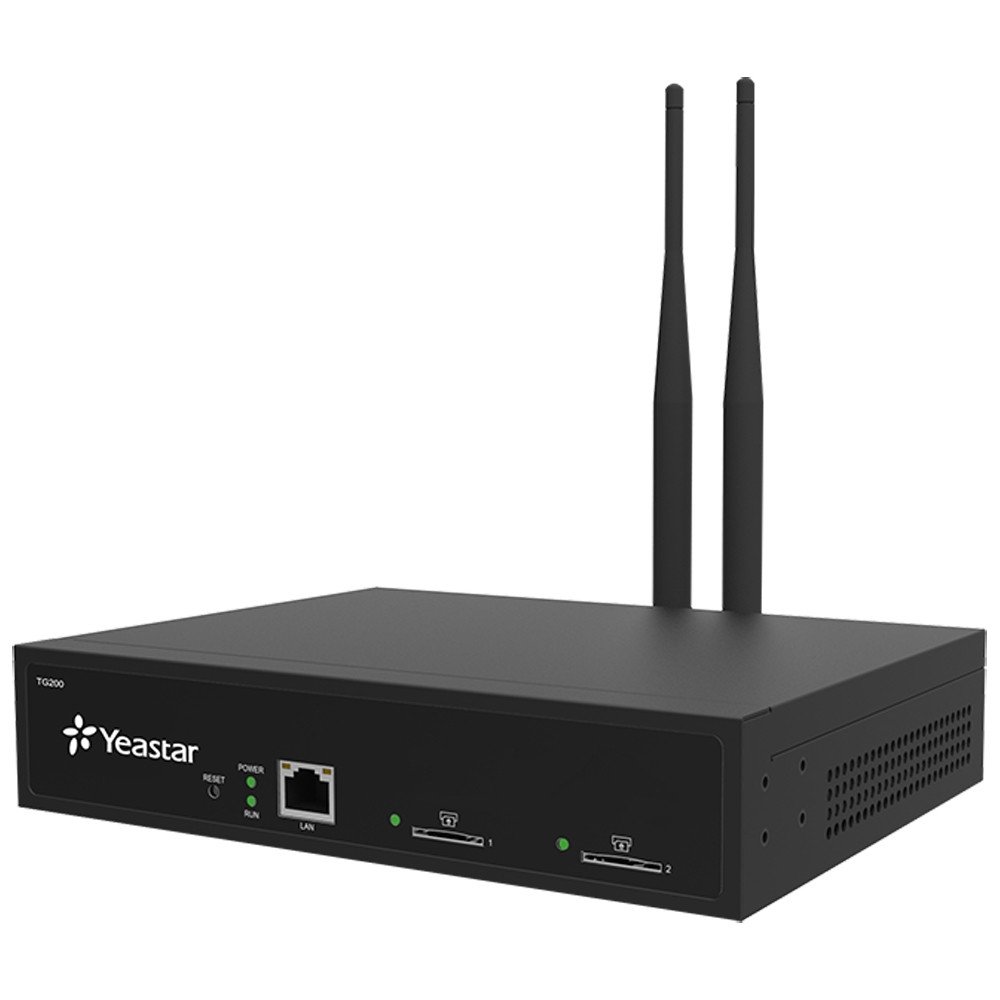
Yeastar TG800 8-Port GSM VoIP Gateway | The Enterprise Pinnacle of Cellular Trunk Technology
There is a threshold in business communication where incremental improvements stop being enough — where the gap between what your cellular gateway infrastructure delivers and what your operation actually demands becomes a measurable drag on productivity, profitability, and operational resilience. Four channels handled the growth surge. Then came the expansion, the new markets, the additional teams, the escalating mobile call volumes, and the realization that your GSM gateway strategy needs to operate at a genuinely different scale.
The Yeastar TG800 8-Port GSM VoIP Gateway is built for exactly that moment.
Eight independent GSM channels. Eight simultaneous calls. Eight SIM cards spanning up to eight carrier networks — delivering on-net cost savings across the broadest possible mobile subscriber base your business serves. One rigorously engineered, enterprise-grade device that transforms your cellular trunk infrastructure from a smart cost-saving tool into a high-throughput, deeply redundant, enterprise-capable communication backbone that handles whatever your business throws at it — today, tomorrow, and as your operation continues to scale.
If the TG400 was the gateway that serious businesses chose when four channels became necessary, the TG800 is the gateway that enterprise operations choose when nothing less than eight channels will do.
What Is the Yeastar TG800 8-Port GSM VoIP Gateway?
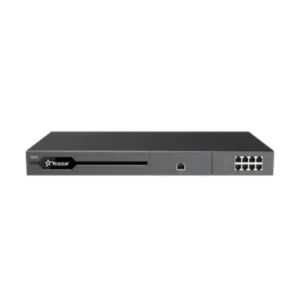
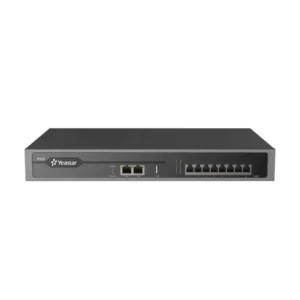
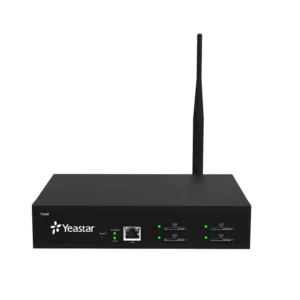
The Yeastar TG800 is a professional-grade, 8-port GSM VoIP Gateway that simultaneously connects eight fully independent GSM cellular channels to your IP PBX or VoIP phone system via completely standards-compliant SIP protocol. Each of the eight ports accommodates its own independent SIM card — from any GSM carrier operating on compatible frequency bands — creating eight live, concurrent cellular trunks that your PBX manages, routes, monitors, and reports on with complete visibility and control.
The TG800 represents the apex of Yeastar’s TG GSM gateway series — the destination for businesses whose communication volumes, redundancy requirements, cost optimization ambitions, and operational complexity demand more than any four-port solution can deliver. It is the gateway that enterprise IT teams specify when they need eight-carrier on-net coverage, when call center operations require eight simultaneous outbound mobile channels, when business continuity architects demand seven layers of cellular failover redundancy, and when SMS gateway operations need the throughput of eight independent cellular messaging channels running concurrently.
The Yeastar TG800 Is the Definitive Enterprise Solution For:
- Large enterprises and corporate organizations with consistently high daily mobile call volumes requiring eight simultaneous GSM channels
- Contact centers and inbound/outbound call operations where eight agents making simultaneous mobile calls is not a peak scenario — it is the daily baseline
- Organizations serving subscribers across eight major mobile carrier networks wanting comprehensive on-net savings coverage that leaves no mobile call destination at premium rates
- IT administrators and MSPs managing enterprise-scale cellular trunk infrastructure for large client deployments
- Logistics and supply chain operations coordinating large mobile workforces across complex, geographically distributed operations
- Healthcare networks and hospital systems managing high-volume patient and inter-facility communication across multiple carrier networks
- Large hospitality groups and hotel chains with extensive operational communication requirements spanning staff, guests, and supplier networks
- High-volume outbound sales and telemarketing operations where simultaneous mobile calling throughput directly determines revenue-generating capacity
- Enterprise business continuity architects requiring seven layers of independent cellular failover redundancy
- High-volume SMS gateway deployments — marketing campaigns, appointment systems, notification platforms — requiring eight-channel cellular messaging throughput
- Multi-branch enterprises centralizing cellular trunk resources at headquarters to serve distributed office networks via IP
- Businesses in high-growth markets with rapidly escalating mobile call volumes that have outgrown four-channel gateway solutions
How the Yeastar TG800 Works — Eight Channels, One Unified Enterprise Architecture
The TG800 extends Yeastar’s proven TG gateway integration model to its eight-channel configuration — delivering a depth of routing intelligence, redundancy architecture, cost optimization coverage, and operational throughput that no smaller gateway device in the TG series can approach.
Stage 1 — Eight-SIM Strategic Configuration Insert up to eight standard GSM SIM cards across the TG800’s eight independent SIM slots. The strategic flexibility of eight slots is extraordinary — eight SIMs from eight different carriers for maximum market coverage, four SIMs each from two dominant carriers for depth on the largest networks, two SIMs each from four carriers for balanced quad-network coverage with redundancy per carrier, or any other combination that serves your specific cost optimization strategy, redundancy requirements, and operational priorities. No other single-device gateway solution offers this degree of cellular network configuration flexibility.
Stage 2 — Eight-Trunk PBX Registration Connect the TG800 to your local network via its Ethernet port. Register each of the eight GSM ports as an independent SIP trunk on your IP PBX — your PBX now manages eight live, concurrent cellular connections simultaneously. Each trunk is independently configurable with its own dial plan rules, routing priorities, failover behaviors, and call handling logic — giving your PBX dial plan an eight-dimensional cellular routing capability that opens strategic possibilities unavailable to any smaller gateway architecture.
Stage 3 — Enterprise-Scale Eight-Channel Routing Intelligence Deploy your eight channels with the full sophistication that only an eight-port architecture enables. Cover all eight major mobile carriers in your market simultaneously with dedicated on-net SIMs. Split inbound and outbound traffic across four channels each with complete separation. Configure cascading failover across seven backup cellular channels. Implement advanced load balancing algorithms that distribute thousands of daily calls optimally across eight independent paths. Dedicate pairs of channels to specific business functions — sales, support, dispatch, and logistics — each operating independently without resource competition. The TG800’s eight-channel architecture gives your communication infrastructure a scale of intelligence, flexibility, and resilience that redefines what enterprise cellular gateway technology can accomplish.
Yeastar TG800 Key Features — Eight Channels That Define Enterprise-Grade GSM Gateway Performance
📡 8 Fully Independent GSM Ports — True Octa-Channel Cellular Architecture
The TG800’s eight GSM ports represent a genuine, hardware-level octa-channel architecture — eight physically independent cellular modules, each operating with complete autonomy from every other port:
- Each port maintains completely independent GSM network registration — a network drop on Port 3 has zero impact on the operation of Ports 1, 2, 4, 5, 6, 7, or 8
- Each port handles its own active call state entirely independently — eight simultaneous calls on eight ports produce no cross-channel interference, audio degradation, or performance compromise
- Each port manages its own SIM account independently — USSD commands, SMS operations, network registration events, and call state are entirely isolated between ports
- Each port registers as a completely independent SIP trunk with your PBX — eight trunks, eight sets of routing rules, eight independent failover configurations
This is not virtualized channel sharing. This is not pooled bandwidth divided eight ways. This is eight genuinely independent cellular radios operating simultaneously in one device — delivering enterprise-scale cellular throughput with the operational reliability that enterprise communication demands.
- Supports GSM 850/900/1800/1900 MHz frequency bands across all eight ports for comprehensive global carrier compatibility
- Each port accepts a standard Mini SIM (2FF) card from any GSM carrier worldwide
- All eight ports operate simultaneously at full GSM performance with zero bandwidth contention or quality degradation across any combination of active calls
- Complete feature parity across all eight ports — every port supports voice calls, SMS gateway, USSD management, and real-time monitoring equally
💰 Eight-Carrier On-Net Optimization — The Ultimate Mobile Calling Cost Strategy
If four-carrier on-net coverage with the TG400 captures the majority of a market’s mobile call destinations at on-net rates, eight-carrier coverage with the TG800 achieves something closer to comprehensive mobile market saturation — ensuring virtually every mobile call your business makes, regardless of which carrier the recipient subscribes to, routes through an on-net channel at the lowest available rate.
Consider the financial mathematics at enterprise scale:
- Without any GSM gateway: 1,000 daily mobile calls at average 3-minute duration and $0.08/minute fixed-to-mobile rate = $14,400 monthly mobile calling cost
- With TG800 (eight on-net SIMs): Near-complete on-net coverage across all carrier networks + SIM plan costs of approximately $160-$240/month (market dependent) = monthly saving of approximately $14,160-$14,240
- Annual saving at enterprise scale: $169,920 – $170,880
Against this backdrop, the TG800’s hardware investment is recovered within the first few days of operation — and every subsequent day generates pure operational cost reduction that flows directly to the bottom line. At enterprise mobile call volumes, the TG800 is not merely a communication tool — it is a significant financial asset with a return on investment that most capital purchases cannot approach.
And the cost optimization compounds further with eight-carrier coverage. Where a four-port gateway might leave 10-15% of mobile call destinations at premium off-net rates due to carrier gaps, eight-port coverage across a market’s full carrier landscape reduces uncovered destinations to a negligible fraction — capturing savings on calls that smaller gateways cannot reach.
🔄 Seven Layers of Cellular Redundancy — Enterprise Business Continuity at Its Deepest
The TG800’s eight independent GSM ports create a seven-layer cellular failover architecture that provides a depth of communication resilience unmatched by any competing single gateway device. Map the complete failover cascade:
- Primary SIP trunks fail → automatic failover to Port 1 (Carrier A)
- Carrier A disrupted → automatic failover to Port 2 (Carrier B)
- Carrier B disrupted → automatic failover to Port 3 (Carrier C)
- Carrier C disrupted → automatic failover to Port 4 (Carrier D)
- Carrier D disrupted → automatic failover to Port 5 (Carrier E)
- Carrier E disrupted → automatic failover to Port 6 (Carrier F)
- Carrier F disrupted → automatic failover to Port 7 (Carrier G)
- Carrier G disrupted → automatic failover to Port 8 (Carrier H)
The statistical probability of eight independent mobile carriers across eight independent network infrastructures simultaneously experiencing service disruption in the same geographic area is so vanishingly small as to be operationally irrelevant. For enterprises operating under SLA commitments, regulatory requirements, or contractual communication availability obligations, the TG800’s seven-layer cellular redundancy architecture delivers a level of assurance that transforms communication continuity from a risk management concern into a solved problem.
This is the failover depth that business continuity architects specify when communication downtime is measured not in inconvenience but in regulatory penalties, client SLA breaches, or direct revenue loss per minute of outage.
📞 Eight Simultaneous Calls — Enterprise-Scale Mobile Calling Throughput
Eight genuinely independent GSM channels delivering eight concurrent calls — not as a theoretical maximum but as a sustained operational reality that the TG800 handles continuously throughout the business day without performance degradation, channel contention, or quality compromise:
- Eight agents simultaneously making outbound mobile calls through on-net GSM channels
- Mixed inbound and outbound traffic across all eight ports with intelligent priority management
- Enterprise call volumes that would saturate four-channel gateways at peak hours flow effortlessly through eight channels
- Load balancing algorithms distribute concurrent calls optimally across all available ports for maximum efficiency
- No call queuing, no channel-busy failures, no overflow to expensive SIP trunk rates during the busiest periods of the day
For contact centers, large sales operations, enterprise dispatch teams, and any high-volume mobile calling environment, eight simultaneous channels means the gateway is never the bottleneck — call routing intelligence, agent availability, and business strategy determine call outcomes, not cellular channel capacity.
🔀 Advanced Eight-Port Group Management — Enterprise Routing Intelligence
The TG800’s port grouping and management capabilities reach a level of sophistication that genuinely serves complex enterprise routing requirements:
Carrier-Based Routing Groups Create logical carrier groups across your eight ports for automated on-net routing. Define Group A as all calls to Carrier A’s number ranges, Group B as Carrier B, and so on through eight carrier groups — your PBX dial plan routes every outbound mobile call to the appropriate carrier group automatically, ensuring on-net rates apply without manual intervention.
Function-Dedicated Port Groups Segment your eight ports by business function. Assign Ports 1-2 to inbound customer service calls, Ports 3-4 to outbound sales calls, Ports 5-6 to logistics and dispatch communication, and Ports 7-8 to SMS gateway operations. Each business function operates on dedicated channels with zero resource competition — inbound customer calls never occupy the channels your outbound sales team needs, and SMS campaigns never consume the voice channels your dispatch team depends on.
Redundancy Pair Configurations Configure eight ports as four active/standby carrier pairs — Port 1 (primary) backed by Port 2 (standby) on a different carrier, Port 3 backed by Port 4, and so on. Each pair provides automatic single-carrier failover while the gateway continues serving other call traffic on the remaining active pairs. Maintenance, SIM card replacements, and carrier disruptions are managed per pair without affecting the overall system’s eight-channel capacity.
Dynamic Load Balancing Configure all eight ports in a dynamic load balancing pool — the TG800 distributes outbound calls across active ports using round-robin, least-loaded, or weighted distribution algorithms. Even utilization across all SIM plans, even wear distribution across all eight cellular modules, and maximum throughput efficiency during peak call periods — all managed automatically without administrator intervention.
📊 Enterprise Call Center GSM Integration — Eight Channels Serving High-Volume Operations
For call center deployments, the TG800’s eight-channel capacity represents a fundamental operational capability — not just a cost-saving tool but a production infrastructure component that directly enables the operation to function at its intended scale:
- Eight simultaneous outbound dialing channels for predictive and progressive dialer campaigns targeting mobile numbers — eight agents simultaneously connected through on-net GSM channels at a fraction of SIP trunk mobile termination costs
- Eight inbound mobile channels presenting to the PBX ACD system as standard SIP trunk DDI numbers — customers calling the call center’s published mobile numbers route through the appropriate on-net port directly to the ACD queue
- Complete CDR integration — every GSM call’s complete call detail record is captured in the PBX system for reporting, agent performance analysis, cost attribution, and regulatory compliance
- Call recording across all eight channels — every mobile call recorded and stored according to your PBX’s recording policy, regardless of which port it traversed
- Real-time channel status monitoring — supervisors see all eight port statuses, active calls, and channel availability in the PBX operator panel and reporting dashboards
For outbound campaigns where mobile number penetration is high — insurance, financial services, healthcare, collections, customer success — the TG800’s eight on-net channels deliver campaign cost economics that SIP trunk-based mobile dialing simply cannot match.
📩 Eight-Channel SMS Gateway — Enterprise-Scale Business Messaging Infrastructure
With eight independent GSM ports each supporting full SMS gateway functionality, the TG800 delivers SMS throughput that approaches dedicated business messaging platform capability — at hardware economics that make per-message subscription platform pricing look extraordinarily expensive:
- Eight simultaneous inbound SMS streams — receive customer messages, automated system notifications, two-factor authentication requests, and supplier communications on eight distinct mobile numbers concurrently
- Maximum outbound SMS throughput — distribute large-volume campaigns across all eight cellular channels simultaneously for the highest possible delivery rate and the widest carrier diversity
- Eight-carrier SMS delivery optimization — route outbound messages through the SIM on the same carrier network as each recipient for optimal delivery rates, reduced carrier filtering of bulk sends, and maximum inbox delivery confirmation
- Dedicated SMS port configuration — assign two, four, or all eight ports exclusively to SMS operations when campaign volume demands maximum messaging throughput, then reconfigure for voice/SMS hybrid operation when campaign periods end
- Enterprise API integration — connect enterprise CRM platforms, marketing automation suites, ERP systems, appointment booking engines, customer notification platforms, and business intelligence tools to eight SMS channels simultaneously via Yeastar’s SMS API
- Multi-brand SMS identity — operate eight distinct mobile numbers representing different brands, departments, regional offices, or service lines — all managed from one device and one management interface
- Delivery confirmation management — track SMS delivery confirmation across all eight channels with unified reporting
For enterprises running large-scale appointment reminder systems, marketing SMS campaigns, customer alert platforms, or high-volume two-factor authentication SMS delivery, the TG800’s eight-channel SMS infrastructure delivers the throughput capacity of a dedicated enterprise messaging platform at a fraction of the ongoing subscription cost.
Full Technical Specifications
| Specification | Detail |
|---|---|
| GSM Ports | 8 (Fully Independent) |
| SIM Card Format | Mini SIM (2FF) per port |
| GSM Frequency Bands | 850 / 900 / 1800 / 1900 MHz |
| Simultaneous Calls | 8 (1 per port) |
| Network Interface | 1 × RJ45 10/100 Mbps Ethernet |
| VoIP Protocol | SIP (RFC 3261) |
| Audio Codecs | G.711 (a/μ-law), G.729, G.723 |
| DTMF Mode | RFC 2833, SIP INFO, In-band |
| SMS Support | Yes — Send and Receive (All 8 Ports) |
| USSD Support | Yes (All 8 Ports Independently) |
| Port Grouping | Yes — load balancing, round-robin, failover |
| Management Interface | Web GUI (HTTP/HTTPS) |
| Configuration | Web browser — no software required |
| Firmware Updates | Remote, web-based |
| Power Supply | 12V DC Adapter (included) |
| Power Consumption | ≤ 20W |
| Operating Temperature | 0°C to 40°C (32°F to 104°F) |
| Dimensions | Desktop / rack-adjacent form factor |
| Compatibility | Any SIP RFC 3261-compliant IP PBX |
| Regulatory | CE, FCC certified |
The Complete Yeastar TG Series — Choosing the Right Scale for Your Operation
| Feature | TG100 | TG200 | TG400 | TG400L | TG800 |
|---|---|---|---|---|---|
| GSM/LTE Ports | 1 | 2 | 4 | 4 (LTE) | 8 |
| Simultaneous Calls | 1 | 2 | 4 | 4 | 8 |
| Max Carrier Coverage | 1 | 2 | 4 | 4 | 8 |
| Redundancy Layers | 0 | 1 | 3 | 3 | 7 |
| SMS Throughput | Single | Dual | Quad | Quad (LTE) | Octa |
| Port Grouping | No | Basic | Advanced | Advanced | Enterprise |
| On-Net Market Coverage | ~15-25% | ~40-50% | ~75-85% | ~75-85% | ~95-100% |
| Call Center Suitability | Entry | Basic | Moderate | Moderate | Full Enterprise |
| Ideal Deployment Size | Micro/SMB | SMB | SME | SME/Future-proof | Enterprise |
| ROI Timeline | Weeks | Days-Weeks | Days | Days | Hours-Days |
The TG800 is unambiguously positioned at the enterprise tier — the destination for organizations where mobile calling volume is high enough that eight simultaneous channels are a daily operational necessity rather than a theoretical capacity reserve. If your analysis of daily concurrent mobile calls, carrier distribution, and cost optimization goals points to needing eight channels, the TG800 is the only logical choice in the Yeastar TG series.
Enterprise Routing Strategy Playbook — Eight Channels, Infinite Configurations
Strategy 1 — Full Market On-Net Saturation
Configuration: One SIM each from the eight largest mobile carriers in your market Objective: Maximum on-net cost savings across all mobile call destinations Result: Near-complete market coverage at on-net rates — virtually every mobile call your business makes routes through an on-net channel. Premium fixed-to-mobile rates become essentially irrelevant across your entire mobile calling volume. For enterprise operations making thousands of mobile calls daily, this configuration delivers the maximum possible annual savings from a single gateway device.
Strategy 2 — Dedicated Inbound and Outbound Enterprise Split
Configuration: Ports 1-4 dedicated to inbound calls (four published mobile numbers), Ports 5-8 dedicated to outbound dialing Objective: Complete inbound/outbound channel separation for high-volume call operations Result: Inbound customer calls and outbound agent calls never compete for the same channel — ever. At peak periods when both inbound volume and outbound campaign activity are simultaneously high, four dedicated channels serve each function without contention. Customer experience is protected by guaranteed inbound channel availability regardless of outbound campaign intensity.
Strategy 3 — Carrier-Redundant Active-Active Eight-Channel Pool
Configuration: Two SIMs each from four different carriers (two ports per carrier) Objective: Maximum on-net coverage with per-carrier hardware redundancy Result: Carrier A coverage from two independent ports — if one port’s SIM fails or the physical module needs maintenance, the second port on the same carrier continues serving Carrier A traffic without interruption. Four-carrier on-net coverage, each with hardware-level redundancy within the same gateway device. Eight ports delivering the reliability of sixteen by providing genuine redundancy at every carrier level.
Strategy 4 — Seven-Level Progressive Failover Cascade
Configuration: Eight ports on eight different carriers, configured as cascading failover chain Objective: Maximum business continuity depth — seven independent backup channels Result: Primary SIP trunk + seven independent cellular backup channels across eight different carrier networks. The probability of complete communication failure is statistically negligible. For regulated industries and enterprises with contractual SLA commitments, this configuration provides communication continuity assurance that no alternative architecture can match at this device count.
Strategy 5 — Enterprise Voice and SMS Hybrid Operations
Configuration: Ports 1-5 for voice calls (carrier-diverse, on-net optimized), Ports 6-8 dedicated to SMS gateway operations Objective: Simultaneous high-volume voice and SMS operations without resource competition Result: Five simultaneous on-net voice channels handle the call center’s outbound mobile dialing and inbound customer calls while three dedicated SMS ports simultaneously power the marketing team’s appointment reminder campaigns and the operations team’s delivery notification system — all running concurrently with zero interference between voice and messaging functions.
Strategy 6 — Department-Allocated Channel Architecture
Configuration: Ports 1-2 (Customer Service), Ports 3-4 (Sales), Ports 5-6 (Logistics/Dispatch), Ports 7-8 (SMS/Marketing) Objective: Dedicated cellular channel allocation by business function Result: Each department operates on guaranteed, dedicated GSM channels that cannot be monopolized by another department’s call volume — even during peak periods. Customer service always has two channels available. Sales always has two channels available. Dispatch always has two channels available. Marketing’s SMS campaigns always have two channels available. Enterprise resource governance applied to cellular trunk infrastructure.
Yeastar TG800 vs. Multiple Smaller Gateways — The Single-Device Enterprise Advantage
A natural question for IT architects evaluating eight-channel cellular gateway capacity is whether deploying two TG400 units or four TG200 units might serve equally well compared to a single TG800. The analysis consistently favors the TG800:
🏆 Unified Management vs. Multiple Device Complexity
Managing one TG800 through a single web management interface is fundamentally simpler than managing two or four separate gateway devices across separate IP addresses, separate management sessions, separate firmware update schedules, and separate configuration change workflows. The TG800 reduces management overhead by 50-75% compared to multi-device alternatives achieving the same channel count.
🏆 Single Physical Footprint vs. Multiple Devices
One TG800 occupies one position on your network shelf, consumes one power outlet, requires one Ethernet port on your network switch, and represents one physical device in your asset inventory. Two TG400 units or four TG200 units require double or quadruple the physical infrastructure — more power outlets, more switch ports, more rack/shelf space, more asset management overhead.
🏆 Unified Call Logging vs. Fragmented Reporting
The TG800’s unified call log across all eight ports provides a single, consolidated source of call data for reporting, analysis, and compliance purposes. Multiple gateway devices produce fragmented call logs across separate devices — requiring data consolidation before meaningful enterprise-level reporting can be generated. The TG800 delivers enterprise reporting readiness out of the box.
🏆 Single Firmware Management vs. Multi-Device Patching
Maintaining firmware currency across one TG800 requires one firmware download and one update operation. Maintaining the same currency across two TG400 units or four TG200 units multiplies the firmware management burden proportionally — and creates the risk of version inconsistency across devices if update schedules slip.
🏆 Lower Total Cost of Ownership
The TG800 typically represents a lower total cost of ownership compared to multi-device alternatives achieving the same channel count — accounting for hardware cost, power consumption, switch port costs, management time, and physical space allocation over a multi-year operational period.
Real-World Deployment Scenarios — The TG800 at Enterprise Scale
📞 Financial Services Contact Center — Outbound Mobile Campaigns
A financial services organization running compliance-regulated outbound communication campaigns — insurance renewals, loan repayments, investment reviews — deploys the TG800 with eight SIMs across all major carrier networks. Eight agents simultaneously dial mobile numbers through on-net GSM channels, with every call automatically recorded and logged for regulatory compliance. Campaign mobile calling costs are reduced by a substantial margin compared to SIP trunk fixed-to-mobile rates. The compliance team has complete, searchable call records accessible through the PBX reporting system covering every GSM channel simultaneously.
🚛 National Logistics and Fleet Coordination Hub
A national logistics operation coordinating hundreds of drivers, warehouse staff, and delivery partners across a country’s major mobile networks deploys the TG800 at their central coordination hub. Eight simultaneous dispatch calls — routinely occurring during morning dispatch briefings and afternoon delivery confirmation periods — route through eight independent on-net GSM channels covering all four major carrier networks (two SIMs per network for redundancy). Fleet coordination calls that previously incurred significant fixed-to-mobile charges now route at on-net rates, delivering substantial monthly cost savings across a high-volume daily operation.
🏥 Regional Hospital Network Communication System
A regional hospital network coordinating communication between multiple facilities, specialist departments, community health teams, and patient management systems deploys the TG800 as their primary cellular trunk infrastructure. Eight channels provide simultaneous call capacity for appointment scheduling, patient callbacks, inter-facility staff communication, and emergency coordination across all carrier networks used by medical staff and patients in the region. HD-quality audio on every call — through carrier-diverse on-net SIMs — ensures that clinical communication is always clear, reliable, and professionally documented in the central PBX system.
🏨 Large Hotel Group Central Communication Hub
A hotel group managing eight properties uses the TG800 at their central operations hub — one SIM per property, each presenting a dedicated mobile number for that property’s guest-facing communication. The PBX routes inbound calls from each SIM to the corresponding property’s extension group. Outbound calls from each property route through the dedicated SIM, presenting the property-specific mobile number as caller ID. Eight properties, eight dedicated channels, one gateway, complete centralized management.
🏢 Enterprise BPO — Multi-Client Mobile Number Management
A business process outsourcing operation serving eight enterprise clients — each requiring dedicated mobile numbers for their customer-facing operations — deploys the TG800 with one SIM per client brand. Inbound customer calls to each brand’s mobile number route directly to the brand-specific ACD queue. Outbound callbacks present the brand-specific mobile number. Eight clients, eight dedicated channels, complete brand isolation, one gateway. Operational efficiency that makes multi-client management scalable and cost-effective.
📱 Enterprise Marketing and Customer Notification Platform
An enterprise retail organization running a high-volume customer communication platform — promotional SMS campaigns, order confirmation notifications, delivery alerts, and loyalty program messages — deploys the TG800 with six ports dedicated to SMS gateway operations across six carrier networks and two ports handling voice confirmation calls. The marketing team’s SMS campaigns reach maximum throughput through six simultaneous carrier-diverse SMS channels. Operations’ voice confirmation calls run through two dedicated voice ports without competing with the SMS operation. One device powers both enterprise communication functions simultaneously at full throughput capacity.
Frequently Asked Questions About the Yeastar TG800
How do I configure eight ports in FreePBX without creating management complexity?
In FreePBX, create eight SIP trunk configurations — one per TG800 port — then use FreePBX’s outbound route system with dial pattern matching to route calls automatically to the appropriate trunk based on destination number prefix or carrier identification. Use trunk groups and failover trunk sequences to implement redundancy. While eight trunks is more to configure than four or two, FreePBX’s batch configuration tools and trunk sequencing make the setup manageable. Yeastar provides detailed FreePBX integration documentation covering multi-port TG gateway configuration, and the pattern-matching approach makes ongoing routing management straightforward once the initial configuration is complete.
Can the TG800 support more than eight simultaneous calls using port grouping?
No — the TG800 supports exactly eight simultaneous calls, one per physical GSM port. Port grouping manages routing intelligence and failover behavior across the eight channels but does not increase the maximum concurrent call capacity beyond the eight physical channel limit. For operations requiring more than eight simultaneous GSM calls, deploying multiple TG800 units and registering all ports as independent SIP trunks on your PBX is the appropriate scaling approach.
What happens if one of the eight ports develops a hardware fault?
The TG800’s independent port architecture means a fault on one port has zero impact on the remaining seven operational ports. If a port hardware fault is detected, that port’s SIP trunk becomes unavailable to the PBX, and your configured failover routing automatically directs calls through the remaining operational ports. The gateway continues functioning at seven-channel capacity while the faulty port is addressed — either through SIM card replacement, firmware troubleshooting, or hardware service. For mission-critical deployments, maintaining a spare SIM in a known-good alternate port configuration provides immediate recovery capability.
Is the Yeastar TG800 rack-mountable for data center deployments?
The TG800 is designed as a desktop/shelf unit rather than a standard 1U rack-mount appliance. For data center or structured rack deployments, the TG800 can be accommodated in telecommunications equipment shelves or universal rack shelf accessories. For organizations requiring rack-native form factors for high-density multi-gateway deployments, consult your Yeastar authorized reseller about the most appropriate physical deployment approach for your specific infrastructure environment.
How does the TG800 handle carrier registration drops on individual ports?
Each port independently manages its own GSM network registration. When a carrier registration drop occurs on one port — due to signal fluctuation, SIM authentication issues, or carrier-side events — that port automatically attempts re-registration according to its configured retry parameters. Other ports continue operating normally throughout the affected port’s re-registration process. Your PBX’s failover trunk configuration directs calls that would normally route through the affected port to the next configured failover trunk until registration is restored. The entire process is automatic and requires no administrator intervention.
Can I use the TG800 with a cloud-hosted PBX while maintaining local call termination?
Yes — this is a highly effective hybrid deployment strategy. The TG800 registers its eight ports as SIP trunks with your cloud-hosted PBX over the local internet connection. Calls originating from cloud PBX extensions that are destined for mobile numbers route through the TG800’s local GSM channels — terminating locally at GSM on-net rates rather than routing through your cloud provider’s mobile termination infrastructure at premium rates. The cost savings logic applies identically to cloud-hosted PBX deployments, and the technical integration is straightforward for any cloud PBX platform that supports custom SIP trunk registration.
What is the warranty and support provision for the Yeastar TG800?
The TG800 is covered by Yeastar’s standard hardware warranty — contact your authorized Yeastar reseller for the specific warranty terms and duration applicable in your region. Yeastar provides technical support documentation, firmware updates, and access to their support infrastructure through authorized reseller channels. For enterprise deployments where hardware replacement lead times are a business continuity concern, discuss advanced replacement support options with your Yeastar reseller at the time of purchase.
The Enterprise ROI Case — Eight Channels, Extraordinary Financial Returns
The financial case for the TG800 does not merely scale linearly from the TG400 — it accelerates. At enterprise mobile call volumes, the per-unit cost of the gateway represents an increasingly negligible fraction of the annual savings it generates, making the return on investment argument for the TG800 even more compelling than for smaller gateway devices.
Conservative Enterprise ROI Model
| Metric | Value |
|---|---|
| Daily outbound mobile calls | 400 |
| Average call duration | 3 minutes |
| SIP trunk fixed-to-mobile rate | $0.08/min |
| Daily cost without TG800 | $96.00 |
| Monthly cost without TG800 | $2,880 |
| Annual cost without TG800 | $34,560 |
| Monthly SIM plan cost (8 SIMs) | ~$160-$240 |
| Monthly net saving with TG800 | ~$2,640-$2,720 |
| Annual net saving | ~$31,680-$32,640 |
At these volumes, the TG800’s hardware investment is recovered within the first few days of operation. Every subsequent day, week, and month generates pure cost reduction — compounding annually into savings that represent significant operational budget relief for any enterprise finance team.
At higher call volumes — 800, 1,000, or 1,500 daily mobile calls — the annual savings scale proportionally, with the hardware cost becoming an even more negligible fraction of the financial benefit generated.
The Yeastar TG800 — Where Enterprise GSM Gateway Strategy Reaches Its Apex
Every business communication journey through the Yeastar TG gateway series leads somewhere. The TG100 proved the concept — one channel delivering immediate, measurable savings from day one. The TG200 doubled the coverage and introduced carrier redundancy. The TG400 reached the operational sweet spot for most growing businesses — four channels, four carriers, comprehensive cost optimization. And now the journey arrives at its enterprise destination.
The Yeastar TG800 is the gateway that enterprise-scale operations choose when they need to extract the maximum possible value from their cellular trunk strategy — when eight simultaneous channels are not a luxury but a daily operational necessity, when seven-layer carrier redundancy is the standard their business continuity plans demand, when on-net coverage across eight carrier networks means their mobile calling cost optimization is as comprehensive as it can possibly be, and when SMS gateway throughput needs to power enterprise-scale customer communication campaigns without compromise.
This is not a device that sits quietly in a network rack doing a modest job. The TG800 is a high-throughput, enterprise-grade communication infrastructure asset — one that processes thousands of calls per day, generates tens of thousands of dollars in annual savings, provides a level of cellular trunk redundancy that keeps businesses communicating through virtually any disruption scenario, and does all of this with the management simplicity and operational reliability that Yeastar’s engineering reputation is built on.
Eight channels. Eight carriers. Seven layers of redundancy. Near-complete market on-net coverage. Enterprise-scale SMS throughput. Unified management. Extraordinary ROI. The TG800 delivers on every dimension of what a high-performance enterprise GSM gateway should be.

 No products in the cart.
Reviews
There are no reviews yet.