
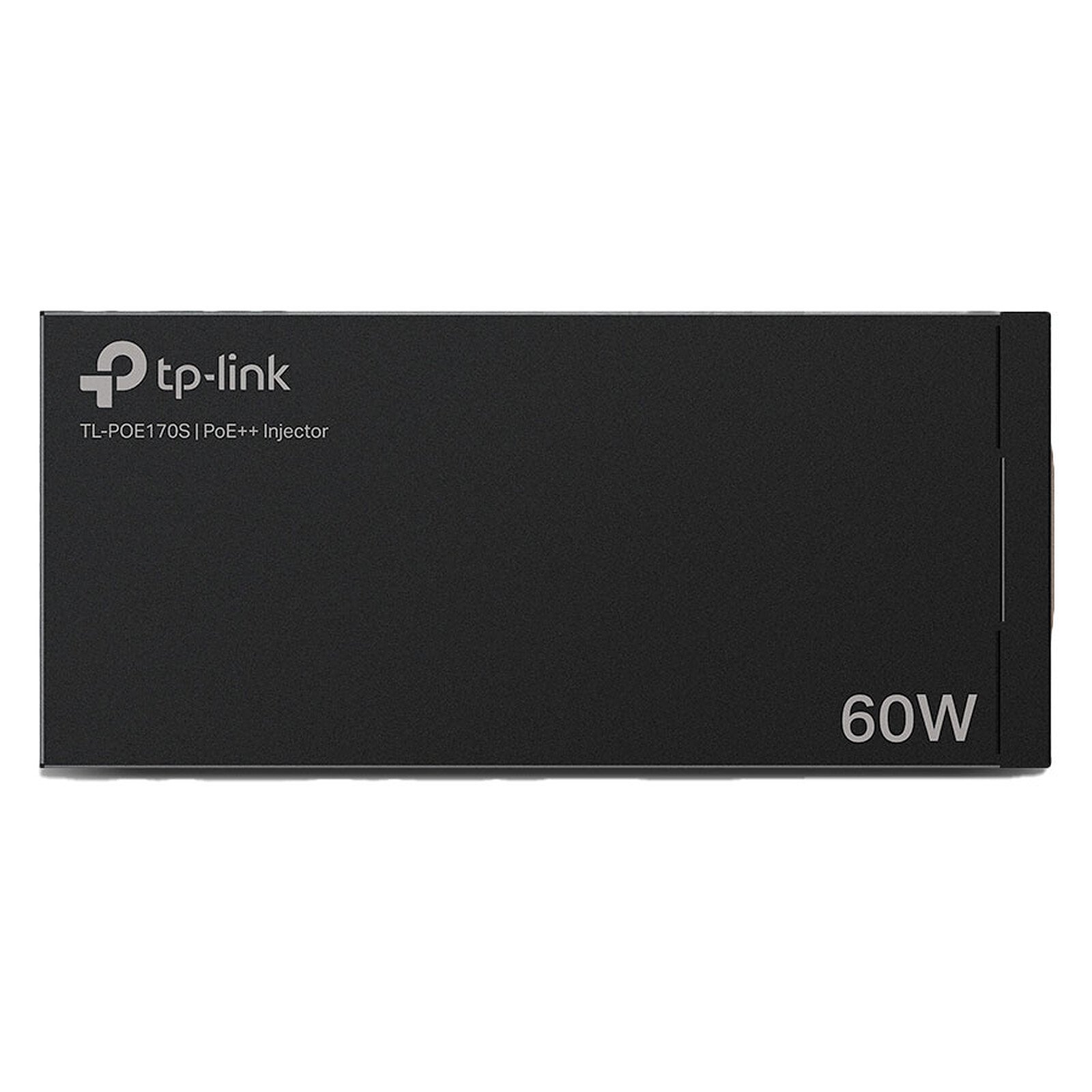
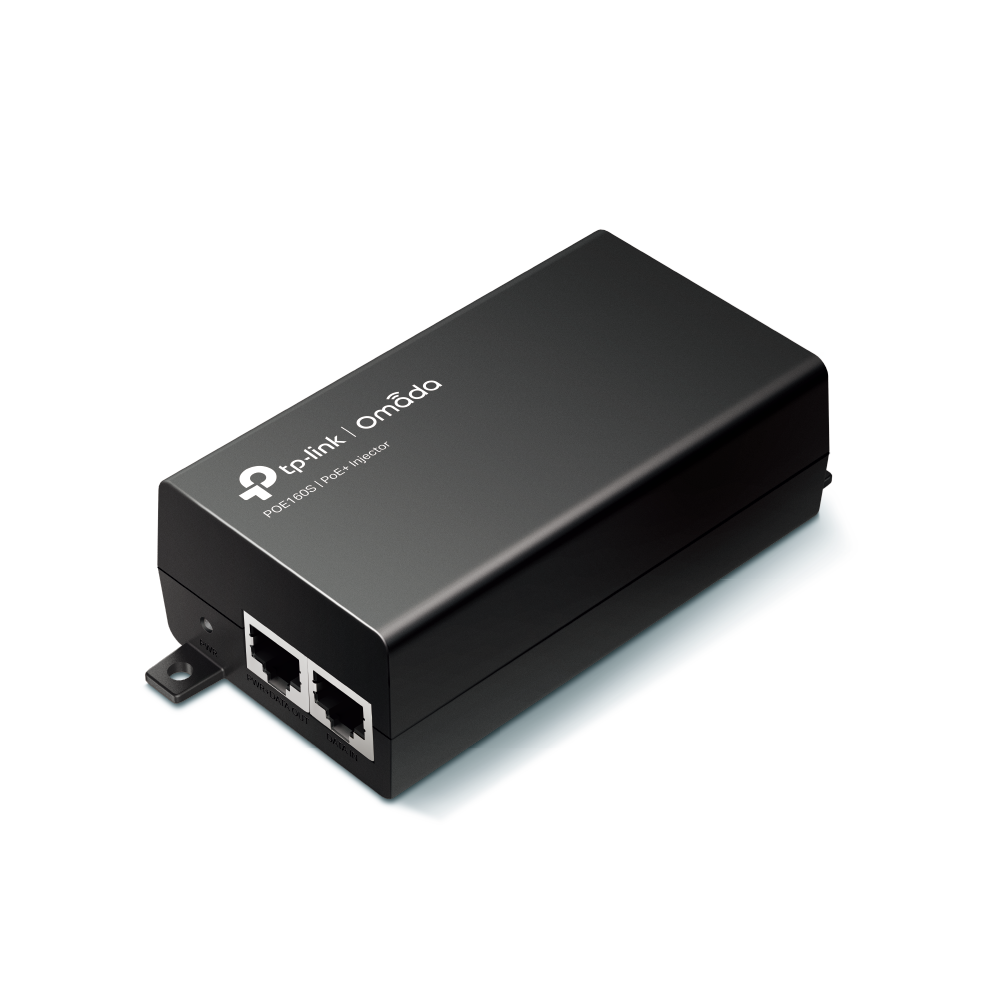
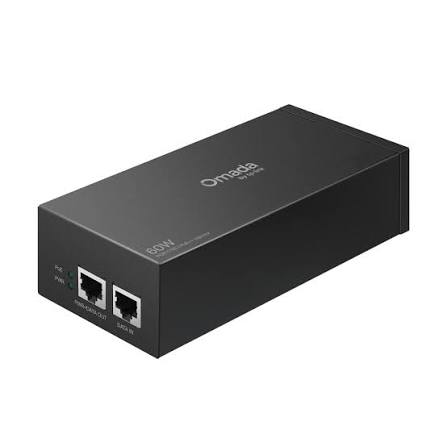
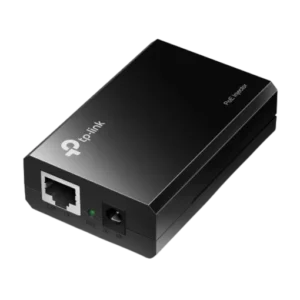
TP-Link PoE++ Injector – Model No: TL-POE170S
Not every PoE device sips power the way a basic camera does. PTZ cameras that pan, tilt, and zoom, high-output LED fixtures, dual-radio access points, and other high-draw equipment often need far more than the 15.4 W a standard PoE injector supplies — and trying to power them with underpowered equipment leads to devices that won’t fully boot, features that silently disable themselves, or performance that degrades under load. The TP-Link TL-POE170S was built for exactly that gap: a PoE++ injector delivering up to 60 W, enough to power the demanding devices a standard injector simply can’t.
What Is the TL-POE170S and Why “PoE++” Matters
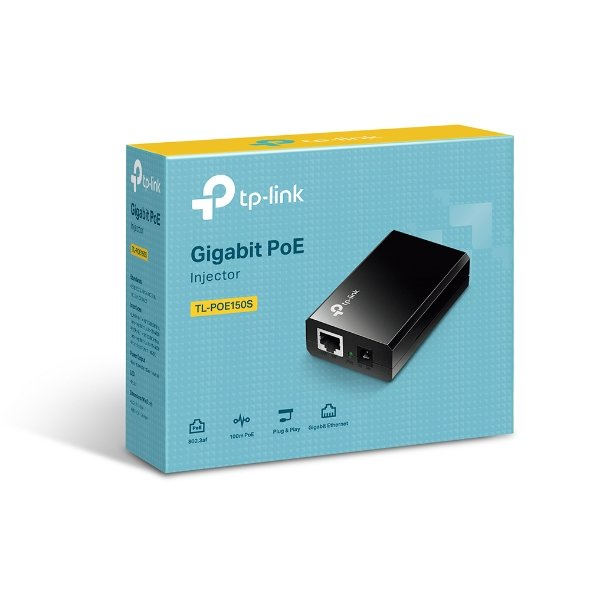
The TL-POE170S is a PoE++ (802.3bt) injector, fully backward compatible with 802.3af and 802.3at standards, meaning it can power everything from basic 15.4 W devices up to full 60 W PoE++ equipment through the same unit. Like a standard PoE injector, it converts a non-PoE connection from your existing router or switch into a powered PoE connection — but with roughly four times the power delivery capacity of TP-Link’s standard TL-POE150S injector, making it the right choice specifically when your device’s power requirements exceed basic PoE or PoE+ limits.
Up to 60W of Power: For Devices That Actually Need It
The TL-POE170S automatically determines the exact power requirement of the connected device and supplies up to 60 W accordingly, with full backward compatibility for 802.3af (15.4 W) and 802.3at (30 W) devices as well. This range matters in practice: a device that seems to power on but behaves erratically, loses features, or reboots under load is frequently a symptom of insufficient PoE power rather than a device fault. For PTZ cameras with motorized pan-tilt-zoom mechanisms, high-output PoE lighting fixtures, or advanced dual-radio access points, the TL-POE170S provides genuine headroom rather than running right at the edge of what a lesser injector can supply.
One Injector Covers the Full PoE Power Range
Because the TL-POE170S auto-negotiates power delivery across 802.3af, 802.3at, and 802.3bt standards, it can serve as a single, versatile injector across a mixed set of devices with different power needs — a basic camera today, a higher-draw access point tomorrow — without needing to match the injector to the exact wattage class of each device in advance. It’s worth noting one specific incompatibility: the TL-POE170S is not compatible with TP-Link’s EAP235, EAP225, or EAP225-Outdoor access points, which require the TL-POE160S instead — a detail worth checking against your specific device before purchase.
Full Gigabit Speed on Both Ports
The TL-POE170S supports full Gigabit speed (10/100/1000 Mbps) on both its data-in and power-plus-data-out ports, ensuring that the higher power delivery doesn’t come at the cost of network throughput — relevant for higher-resolution PTZ cameras or access points that are also pushing more data than a basic fixed camera.
Durable Metal Casing for Continuous High-Power Operation
Delivering up to 60 W continuously generates meaningfully more heat than a basic 15.4 W injector, and the TL-POE170S addresses this with a durable metal casing that supports better heat dissipation than a plastic enclosure would allow — important for a device that may run continuously, embedded in an equipment cabinet, powering a device that itself runs 24/7. The fanless design keeps operation silent despite the higher power throughput.
Reach Up to 100 Meters at Full Power
Like standard PoE equipment, the TL-POE170S delivers its power and data over the standard 100-meter maximum Ethernet distance, meaning it integrates into existing cable runs without requiring you to rethink your cabling layout, even when supplying significantly more power than a basic injector.
Genuinely Plug and Play, Even at Higher Power
Despite the substantial increase in power delivery capability, the TL-POE170S requires no software configuration or management interface. Connect your existing non-PoE router or switch to the data-in port, connect your high-power PoE device to the power-and-data-out port, and the injector automatically negotiates and delivers the correct power level.
Perfect For
- Security installers powering PTZ cameras that a standard injector can’t fully support
- Businesses adding high-output PoE lighting or specialized fixtures to existing non-PoE networks
- IT technicians troubleshooting access points or cameras that underperform on standard PoE
- Installations using dual-radio or high-power Wi-Fi 6 access points requiring PoE++ power
- Anyone whose device manual specifies PoE++ or 802.3bt power requirements
- Small businesses adding one high-draw PoE device without replacing an entire non-PoE switch
- Retrofitting existing camera or access point installations that are underpowered on current equipment
- IT integrators keeping a versatile, single injector on hand that covers the full PoE power range
- Anyone deploying a single high-wattage PoE device where a full PoE++ switch isn’t otherwise needed
- Renters and small offices needing high-power PoE without replacing existing network equipment
The Bottom Line
When a PoE device needs real power — not just a basic 15.4 W trickle — a standard injector or underpowered switch port simply won’t cut it, and the symptoms (partial functionality, random reboots, disabled features) are often mistaken for device faults rather than power shortfalls. The TP-Link TL-POE170S delivers up to 60 W of genuine PoE++ power, full backward compatibility across the entire PoE standard range, full Gigabit throughput, and durable, silent operation, solving the specific problem of underpowered high-draw devices without requiring a full PoE++ switch.
Reviews
There are no reviews yet.