
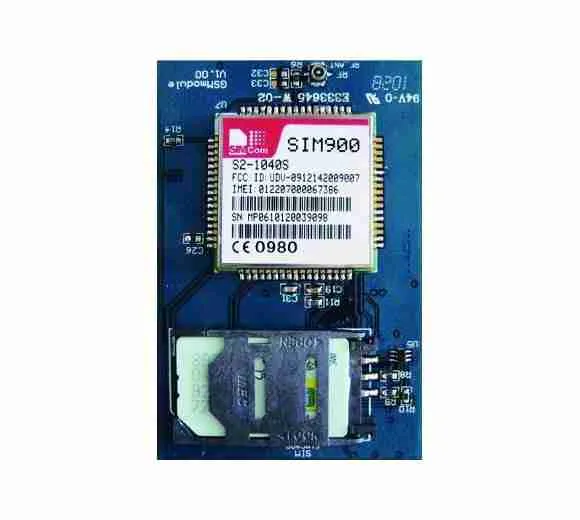
Yeastar GSM Module for S-Series PBX | Native Cellular Trunk Intelligence Built Directly Into Your Business Phone System
Every business communication architecture has a gap — a space between the sophisticated IP telephony infrastructure managing desk phone calls and the mobile network where an increasing proportion of real-world business conversations actually happen. SIP trunks handle VoIP traffic elegantly. FXO modules bridge analog PSTN lines into the modern PBX world. But mobile network connectivity — the cellular trunk layer that enables on-net mobile calling cost savings, GSM failover protection, and integrated cellular communication — has traditionally required a separate external device sitting outside the PBX chassis, consuming additional network ports, demanding separate management attention, and introducing an additional point of complexity into what should be a unified communication architecture.
The Yeastar GSM Module for S-Series PBX eliminates that gap entirely. Not with an external gateway. Not with a separate device on the network shelf. But with a native, internally installed GSM expansion module that slots directly into your Yeastar S-Series PBX chassis — bringing cellular trunk connectivity inside the phone system itself, where it belongs, managed through the same unified interface that controls every other aspect of your telephony infrastructure.
This is GSM gateway functionality without the gateway. Cellular trunk intelligence without the external box. Mobile network connectivity delivered with the operational simplicity, management unity, and feature completeness that only a truly native PBX integration can provide.
What Is the Yeastar GSM Module for S-Series PBX?
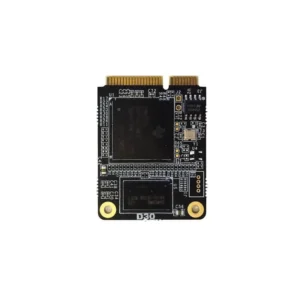
The Yeastar GSM Module is a purpose-engineered internal GSM cellular expansion module designed for installation in Yeastar’s S-Series VoIP PBX systems — including the S20, S50, S100, and S300. By inserting a standard GSM SIM card and installing the module into an available PBX expansion bay, businesses transform their Yeastar S-Series PBX into a natively integrated GSM gateway — capable of routing calls to and from the mobile network directly through the PBX without any external hardware, separate configuration system, or additional network infrastructure.
Available in single-port (1 GSM channel) and dual-port (2 GSM channels) configurations depending on the specific module variant, the Yeastar GSM Module presents each cellular channel to the PBX as a fully managed, feature-complete trunk — indistinguishable in capability from any SIP trunk or analog FXO port within the system, but powered by a live GSM cellular connection carrying your carrier’s SIM-based calling plan.
The strategic value proposition is immediate and compelling: all the cost-saving, redundancy-delivering, mobile-network-bridging power of a dedicated GSM gateway — integrated natively inside your existing Yeastar S-Series PBX chassis, managed through your existing PBX interface, with zero additional hardware footprint.
The Yeastar GSM Module Is the Ideal Solution For:
- Yeastar S-Series PBX owners wanting to add GSM cellular trunk capability without deploying additional external gateway hardware
- Small and medium businesses with meaningful mobile call volumes seeking on-net calling cost savings through native PBX integration
- IT administrators prioritizing management simplicity — one system, one interface, one support path for all trunk types including GSM
- Organizations building hybrid trunk architectures combining SIP trunks, analog PSTN lines, and GSM cellular in a unified, internally managed system
- Businesses requiring GSM failover capability that activates automatically when primary SIP trunks or internet connectivity fails
- Branch offices and remote locations where external GSM gateway hardware would add unwanted complexity and management overhead to a compact telephony deployment
- Businesses with high mobile-to-mobile call volumes wanting to leverage carrier on-net rates through a natively integrated cellular trunk
- Operations in areas with unreliable fixed-line or broadband infrastructure where GSM cellular provides more consistent primary or backup connectivity
- Healthcare, legal, and professional services organizations needing seamlessly integrated mobile calling with full call recording and compliance logging
- Cost-conscious SMBs seeking the financial benefits of GSM gateway technology without the capital and management overhead of a separate gateway device
The Native Integration Advantage — Why Internal Beats External Every Time
Before examining the Yeastar GSM Module’s features in depth, it is worth understanding precisely why internal PBX module integration delivers fundamentally superior operational value compared to external GSM gateway alternatives — even sophisticated, well-configured external devices.
🏆 One Device, One Interface, One Support Path
When your GSM trunk lives inside your PBX as a native module, your entire telephony infrastructure — SIP trunks, analog lines, GSM cellular, extensions, IVR, call queues, recording, and reporting — is managed through a single, unified web interface. There is no separate gateway management portal to log into. No separate gateway IP address to remember. No separate firmware update schedule to maintain. No separate call log system to correlate with PBX records.
Every administrative action — routing changes, trunk configuration updates, call log review, diagnostic testing — happens in one place, through one familiar interface, managed as one coherent system. For IT administrators managing multiple responsibilities, this management consolidation is not merely convenient — it is a meaningful, daily time saving that compounds into significant operational efficiency over the lifetime of the installation.
🏆 Zero Additional Hardware Footprint
An external GSM gateway requires physical space on a network shelf or rack, an additional power adapter and outlet, an additional Ethernet cable and switch port, and an additional device in the asset management and maintenance inventory. The Yeastar GSM Module requires none of these — it occupies an expansion bay that exists inside the PBX chassis, is powered by the PBX’s internal power bus, and connects to the PBX’s internal communication bus without any external cabling.
For compact deployments — small office server rooms, branch office networking cabinets, and limited-space equipment environments — the zero-footprint advantage of the internal module is a genuine physical infrastructure benefit.
🏆 Direct Internal Bus Communication — No Network Latency
External GSM gateways communicate with the PBX over the local network via SIP — introducing network encoding, decoding, and transmission steps between the cellular channel and the PBX call processing engine. The Yeastar GSM Module communicates with the PBX through the internal expansion bus — a direct, low-latency connection that eliminates the network communication layer entirely.
The result is marginally lower call setup latency, simpler audio path management, and elimination of any SIP trunk registration management between the gateway and PBX — because the module is not a separate SIP device. It is a native component of the PBX itself.
🏆 Full PBX Feature Access — No Feature Degradation Through Intermediary Devices
External GSM gateways present themselves to the PBX as SIP trunks — and the feature set available for calls on those trunks is limited to what the SIP interface between gateway and PBX supports. The Yeastar GSM Module, as a native internal component, has direct access to the full Yeastar PBX feature set — every routing capability, recording option, reporting dimension, and management tool available in the system applies equally to GSM module calls as to any other call type.
Yeastar GSM Module Key Features — Cellular Trunk Intelligence, Natively Delivered
📡 Native GSM Cellular Trunk — SIM-Based Calling Inside Your PBX
Each port on the Yeastar GSM Module accepts a standard Mini SIM (2FF) card from any GSM carrier operating on compatible frequency bands — transforming that SIM’s mobile connection into a fully managed PBX trunk channel from inside the chassis:
- Inbound calls to the SIM’s mobile number arrive at the PBX directly through the internal module — no external device, no SIP hop, no additional network infrastructure
- Outbound calls route through the GSM module to the mobile network exactly as configured in the PBX dial plan — transparently and automatically
- On-net calling routes calls destined for mobile numbers on the same carrier as the installed SIM through the GSM channel — activating carrier on-net rates and delivering immediate cost savings
- Full carrier feature support — USSD commands, SMS sending and receiving, and carrier account management accessible directly from the PBX interface
Supports GSM 850/900/1800/1900 MHz frequency bands for broad global carrier compatibility across the world’s major GSM networks.
💰 On-Net Mobile Calling Cost Savings — The Core Financial Benefit
The fundamental cost optimization that drives GSM module adoption is the same principle that powers the entire Yeastar TG gateway series — just delivered with native integration efficiency. When your PBX routes outbound calls to mobile numbers through the GSM module’s SIM card, those calls originate from a mobile number on the same carrier network as many of your call destinations — qualifying for the carrier’s on-net mobile-to-mobile rate rather than the premium fixed-to-mobile rate that SIP trunk providers charge.
In markets where fixed-to-mobile call rates represent a significant portion of monthly telephony expenditure — which describes the majority of businesses that regularly call mobile numbers — the GSM module’s on-net routing delivers immediate, measurable monthly cost reduction from the first billing cycle after installation.
The financial case is strengthened further by the module’s zero additional hardware cost compared to deploying an equivalent external gateway — the internal integration means the entire cost saving flows to the bottom line without the ongoing management overhead that external devices introduce.
🔄 Automatic GSM Failover — Cellular Backup When the Internet Fails
The Yeastar GSM Module delivers business continuity protection that is both more reliable and easier to configure than external gateway failover solutions — because failover routing is configured entirely within the same PBX dial plan system that manages all other routing decisions:
- Configure outbound routes to include the GSM module trunk as an automatic fallback when primary SIP trunks are unavailable
- When internet connectivity fails and SIP trunks become unreachable, the PBX automatically routes outbound calls through the GSM cellular channel without manual intervention
- Inbound calls on the SIM’s mobile number continue arriving at the PBX through the cellular channel regardless of internet status — the GSM path is completely independent of IP connectivity
- Emergency calls remain possible through the GSM cellular connection throughout any internet outage — a critical workplace safety and compliance capability
- When internet and SIP trunk connectivity is restored, the PBX automatically reverts to the primary SIP trunk routing — no administrator action required
📩 Integrated SMS Gateway — Cellular Messaging From Within the PBX
The Yeastar GSM Module extends its cellular integration beyond voice calls to include native SMS gateway functionality — accessible directly through the Yeastar PBX management interface:
- Inbound SMS — receive text messages sent to the module’s SIM number, managed and forwarded through the PBX system
- Outbound SMS — send text messages from the PBX interface or via API integration with business applications
- Business notification SMS — trigger automated SMS messages from PBX events — voicemail notifications, missed call alerts, system events
- Application integration — connect CRM systems, ticketing platforms, appointment booking tools, and business automation workflows to the SMS capability via API
- Two-factor authentication delivery — use the GSM module’s SMS capability for delivering verification codes from business applications
All SMS functionality managed through the unified Yeastar PBX interface — no separate SMS platform subscription, no external gateway SMS management portal, no additional configuration complexity.
🔊 HD Audio Quality on GSM Calls — Professional Voice Clarity
GSM cellular calls routed through the Yeastar GSM Module benefit from the same audio processing capabilities that the S-Series PBX applies to all call types:
- Echo cancellation eliminates the acoustic feedback that can degrade audio quality on cellular calls in office environments
- DTMF detection and generation ensures reliable tone signaling for IVR navigation, voicemail access, and automated system interaction on outbound GSM calls
- Wideband codec support where the GSM network and carrier support enhanced audio — delivering improved voice clarity compared to standard narrowband GSM audio
- Noise reduction processing applied within the PBX call engine to improve voice intelligibility on cellular connections in challenging acoustic environments
⚙️ Unified PBX Management — GSM Trunk Configured Like Any Other Trunk
The most operationally significant feature of the Yeastar GSM Module is not a telephony capability — it is a management philosophy. Every aspect of the GSM module’s configuration and operation is managed through the standard Yeastar PBX web interface, alongside every other trunk type, extension configuration, routing rule, and system setting:
- Trunk configuration — GSM module ports appear as configurable trunk channels in the PBX trunk management section with the same configuration workflow as SIP or FXO trunks
- Inbound routing — create inbound routes for the GSM number using the standard PBX inbound route configuration — direct to extension, IVR, ring group, or queue
- Outbound routing — define which calls route through the GSM trunk using the standard outbound route and dial plan tools
- Failover configuration — configure GSM as a fallback trunk in outbound route trunk sequences using the standard trunk priority ordering
- Call recording — apply the same call recording policies to GSM calls as to any other trunk type — automatic, manual, or extension-based recording
- CDR and reporting — GSM trunk calls appear in the unified call detail record system with full metadata for reporting, analysis, and compliance
- USSD management — send carrier USSD commands from the PBX interface for SIM account management, balance checks, and package activation
- SMS interface — manage SMS sending and receiving through the PBX’s unified messaging interface
One administrator. One interface. One support path. Complete GSM cellular trunk management alongside every other component of the business phone system.
Full Technical Specifications
| Specification | Detail |
|---|---|
| Module Type | GSM Cellular Trunk |
| Available Configurations | Single-port (1 GSM channel) / Dual-port (2 GSM channels) |
| SIM Card Format | Mini SIM (2FF) per port |
| GSM Frequency Bands | 850 / 900 / 1800 / 1900 MHz |
| Simultaneous Calls | 1 per port (1 or 2 depending on module variant) |
| SMS Support | Yes — Send and Receive |
| USSD Support | Yes |
| Echo Cancellation | Yes |
| DTMF Support | Yes — Detection and Generation |
| Compatible PBX | Yeastar S20, S50, S100, S300 |
| Module Form Factor | Internal expansion module |
| Installation | Tool-assisted module bay insertion |
| Management | Via Yeastar PBX Web GUI |
| Power | Powered via PBX expansion bus |
| Operating Temperature | 0°C to 40°C (32°F to 104°F) |
| Compliance | CE, FCC certified |
Yeastar GSM Module vs. External Yeastar TG Gateway — Which Is Right for You?
Both the Yeastar GSM Module and the Yeastar TG gateway series deliver GSM cellular trunk connectivity for Yeastar PBX environments — but they serve distinctly different deployment profiles. Understanding the distinction ensures you choose the right solution for your specific environment.
| Dimension | Yeastar GSM Module | Yeastar TG Gateway (External) |
|---|---|---|
| Installation Location | Inside PBX chassis | External — separate device |
| Compatible PBX | Yeastar S-Series only | Any SIP RFC 3261-compliant PBX |
| Maximum GSM Channels | 1-2 per module (expandable with slots) | Up to 8 (TG800) |
| Physical Footprint | Zero — internal | Additional shelf/rack device |
| Management Interface | Unified Yeastar PBX GUI | Separate gateway web interface |
| Network Ports Required | None — internal bus | 1 × Ethernet per gateway |
| Power Requirements | PBX bus powered | Separate power adapter |
| Total Cost of Ownership | Lower for low-channel deployments | Competitive for high-channel needs |
| Call Feature Access | Full native PBX features | Full features via SIP integration |
| Best For | 1-2 GSM channels, Yeastar S-Series owners | 2-8 GSM channels, any PBX platform |
| Management Complexity | Minimal — unified system | Moderate — two-device management |
| Scalability | Limited by PBX expansion slots | Scalable to 8 channels per device |
Choose the Yeastar GSM Module if: You own a compatible Yeastar S-Series PBX, need 1-2 GSM channels, prioritize management simplicity and unified single-system administration, and want to minimize hardware footprint and total cost of ownership.
Choose the Yeastar TG Gateway Series if: You need more than 2 simultaneous GSM channels, are using a non-Yeastar PBX platform, require multi-carrier on-net optimization across 4-8 networks, or need the advanced port grouping and load balancing capabilities of dedicated gateway hardware.
For many Yeastar S-Series owners with moderate mobile call volumes, the GSM module delivers the optimal balance of cost savings, management simplicity, and operational integration — the gateway approach reserved for deployments where channel count requirements exceed what the module expansion architecture can accommodate.
Building the Complete Yeastar S-Series Modular Trunk Architecture
The Yeastar GSM Module reaches its full strategic value when understood as part of the complete Yeastar S-Series modular expansion ecosystem — a system where multiple module types combine within a single PBX chassis to create a comprehensive, multi-trunk-type telephony infrastructure managed entirely through one unified interface.
The Complete S-Series Modular Trunk Stack
SIP Trunks (Software Configured) Your primary call traffic flows through SIP trunks from your chosen VoIP provider — configured in the PBX software with no physical module required. Cost-effective, geographically flexible, and feature-rich for the majority of daily call volume.
GSM Module (YST-GSM) One or two GSM channels for on-net mobile calling cost optimization, automatic failover when internet connectivity fails, and integrated SMS gateway capability — all managed natively within the PBX interface alongside SIP trunks.
FXO Module (YST-O2 / YST-O4) Analog PSTN line integration for legacy line preservation, additional failover diversity, fax line connectivity, and regulatory compliance requirements — managed through the same interface as GSM and SIP trunks.
FXS Module (YST-S2 / YST-S4) Analog telephone and fax machine extension connectivity — bringing legacy analog devices into the modern IP PBX as fully managed extensions without requiring replacement.
BRI Module (YST-B2) ISDN Basic Rate Interface digital trunk connectivity for businesses retaining ISDN service during migration to IP telephony.
E1/T1 Module (YST-E1) Primary Rate Interface digital trunk connectivity for enterprises retaining high-capacity digital trunk infrastructure.
Every module type — GSM cellular, analog FXO, analog FXS, ISDN BRI, E1/T1 — managed through one unified Yeastar PBX web interface. One phone system, every trunk type, complete infrastructure coverage. This is the architectural vision the Yeastar GSM Module is built to serve — a genuinely unified telephony infrastructure where cellular connectivity is not bolted on as an external afterthought but integrated natively as a first-class trunk type.
Real-World Deployment Scenarios — The Yeastar GSM Module Delivering Value
🏪 Retail Business With High Supplier Mobile Calling
A retail operation whose purchasing team makes dozens of daily calls to supplier and logistics contacts on mobile numbers installs the Yeastar GSM Module with a SIM from the dominant mobile carrier in their market. The PBX dial plan routes all outbound calls to mobile numbers through the GSM module automatically — on-net rates apply, fixed-to-mobile charges drop dramatically, and every call is logged and recorded in the PBX system without any separate gateway management.
🏥 Medical Practice — Integrated Patient Callback and Failover
A medical practice running a Yeastar S50 PBX installs the GSM Module with a local carrier SIM. Patient callbacks from clinical staff route through the GSM on-net channel — reducing calling costs while ensuring every patient interaction is recorded and compliant. During a broadband outage, the practice’s phone system remains operational through the GSM module’s cellular connection — appointments are confirmed, prescriptions communicated, and patient queries handled without interruption.
🏢 Professional Services Branch Office
A law firm’s regional branch office runs a Yeastar S20 PBX with SIP trunks as primary connectivity. The GSM Module provides both on-net mobile calling for client callbacks and automatic failover protection when the office’s broadband connection — shared with the building’s other tenants — experiences disruption during business hours. The branch phone system remains reachable and operational regardless of shared internet reliability, with complete call recording maintained for professional compliance requirements.
🏗️ Construction Site Temporary Office
A construction project office deployed in a temporary site facility installs a Yeastar S-Series PBX with the GSM Module as the primary trunk — no fixed-line broadband, no SIP trunk contract, just a local SIM providing reliable GSM connectivity for the duration of the project. Project managers, site coordinators, and subcontractor contacts are called through the on-net GSM channel at competitive mobile rates. When the project ends, the SIM is deactivated, the module is retained for the next deployment, and no fixed-line contract cancellation fees are incurred.
🏨 Boutique Hotel Front Desk Operations
A boutique hotel running a Yeastar S50 at the front desk installs the GSM Module with a local SIM for guest callback calls and supplier coordination. Guest mobile numbers — spanning multiple carriers — receive callbacks routed through the GSM on-net channel when the destination carrier matches the module’s SIM. Front desk staff’s outbound mobile call costs drop noticeably from the first billing cycle. The hotel’s property management team values the single-interface simplicity of managing GSM trunks, analog guest room lines, and SIP trunks through one unified PBX system.
Frequently Asked Questions About the Yeastar GSM Module for S-Series PBX
Which Yeastar S-Series PBX models are compatible with the GSM Module?
The Yeastar GSM Module is compatible with Yeastar S-Series PBX models that feature physical expansion module bays — specifically the S20, S50, S100, and S300. The number of available expansion slots varies by model: the S20 typically offers 1 slot, the S50 offers 2 slots, the S100 offers 4 slots, and the S300 accommodates a larger number of modules for enterprise configurations. Always verify current slot availability and module compatibility against your specific PBX model and firmware version with your authorized Yeastar reseller before purchase.
How many GSM modules can I install in my Yeastar S-Series PBX?
You can install one GSM module per available expansion slot, with each module providing one or two GSM channels depending on the module variant. The total number of GSM modules is limited by the number of available expansion bays in your PBX model — which varies from one slot in the S20 to multiple slots in the S100 and S300. Expansion slots can be shared between different module types — a combination of GSM, FXO, FXS, and BRI modules — giving you the flexibility to build the exact multi-trunk-type architecture your business requires within your PBX’s physical capacity.
Does the Yeastar GSM Module support SMS sending and receiving?
Yes. Both inbound and outbound SMS functionality is supported through the Yeastar GSM Module and managed via the Yeastar PBX web management interface. Inbound SMS messages to the module’s SIM number are received and managed through the PBX system. Outbound SMS messages can be sent from the PBX interface and via API integration with external business applications. This integrated SMS capability eliminates the need for a separate SMS gateway platform subscription for businesses with moderate SMS volume requirements.
Can I use the GSM Module for automatic failover if my internet connection goes down?
Yes — and this is one of the most operationally valuable applications of the module. In the Yeastar PBX’s outbound route configuration, add the GSM module trunk as a secondary or tertiary trunk in the trunk sequence after your primary SIP trunks. When the PBX detects that primary SIP trunks are unavailable, outbound calls automatically route through the GSM cellular channel. Simultaneously, inbound calls on the SIM’s mobile number continue arriving at the PBX through the cellular path — because the GSM signal path is entirely independent of internet connectivity. The failover is automatic, requiring no manual administrator intervention during the outage event.
What frequency bands does the Yeastar GSM Module support?
The Yeastar GSM Module supports GSM 850, 900, 1800, and 1900 MHz frequency bands — covering the principal GSM frequencies used by carriers across North America, Europe, Africa, Asia-Pacific, and Latin America. Before purchasing, verify that your intended carrier operates a GSM network on one or more of these frequency bands in your geographic area. Your carrier’s network coverage page or customer service team can confirm which frequency bands their GSM network uses in your location.
Is the GSM Module managed separately from the rest of the Yeastar PBX?
No — and this is the defining advantage of the internal module approach. The GSM Module is managed entirely within the standard Yeastar PBX web management interface alongside every other trunk type, extension, routing rule, and system feature. There is no separate management portal, no separate login, no separate configuration system. GSM trunk configuration, inbound routing, outbound routing, call recording policies, CDR reporting, SMS management, USSD commands, and diagnostic tools are all accessible through the same interface you use to manage every other aspect of your Yeastar PBX.
Can I run the Yeastar GSM Module and an external Yeastar TG gateway simultaneously on the same PBX?
Yes. If your mobile call volume requirements exceed what the GSM module’s 1-2 channels provide, you can simultaneously register an external Yeastar TG gateway as additional SIP trunk channels on the same Yeastar S-Series PBX. The internal GSM module channels and the external TG gateway channels both appear as independent trunk resources in the PBX dial plan — your routing rules can distribute calls across all available GSM channels intelligently, regardless of whether those channels originate from the internal module or the external gateway. This hybrid approach allows gradual scaling of GSM channel capacity beyond what the module expansion architecture alone can accommodate.
The Yeastar GSM Module — Cellular Trunk Connectivity Where It Was Always Meant to Be
There is an elegance to communication infrastructure that is designed from first principles rather than assembled from compromises. The Yeastar GSM Module for S-Series PBX embodies that elegance — taking the proven cost savings, failover protection, and mobile network bridging capability of GSM gateway technology and delivering it where it logically belongs: inside the PBX system itself, managed as a native component of the unified telephony infrastructure, visible and controllable through the same interface that governs every other aspect of how your business communicates.
No additional hardware on the network shelf. No separate management portal to maintain. No additional network ports consumed. No additional firmware update schedules to track. No additional support contracts to manage. No additional points of failure between the cellular channel and the call processing engine. Just clean, native, internally integrated GSM cellular trunk connectivity — delivering on-net cost savings, automatic failover protection, and integrated SMS capability from inside the chassis of the Yeastar PBX you already depend on.
For Yeastar S-Series PBX owners who want the cellular trunk advantage without the external gateway complexity, the GSM Module is the answer that was designed into the architecture of the system from the beginning — waiting in the expansion bay for the moment your business decides that mobile network integration deserves to be treated as a first-class component of your communication infrastructure

 No products in the cart.
Reviews
There are no reviews yet.